What if the most productive thing you could do today wasn’t clearing your inbox, but actually doing nothing for sixty seconds? It’s exhausting to feel constantly on edge, battling persistent brain fog and those nagging tension headaches that never seem to quit. You’re likely tired of hearing that you just need to “relax” when your schedule is already overflowing. This is why finding effective mindfulness techniques for stress reduction is about more than just sitting still; it’s about reclaiming your mental clarity in the middle of the chaos.
This 2026 guide is here to help you find that inner calm with practical, science-backed methods that actually fit into a hectic life. You’ll discover how to lower your cortisol levels and improve your emotional regulation through simple, daily shifts. We’re going to explore immediate relief strategies for your most stressful moments, the latest in wearable biofeedback tools and guided apps, and how to build a sustainable habit that feels like a gift rather than a burden. Let’s start the journey toward better sleep and a clearer mind today.
Key Takeaways
- Understand the biology of calm and how a simple “mental pause” can help lower cortisol levels and soothe an overactive amygdala.
- Discover effective mindfulness techniques for stress reduction, including the 5-4-3-2-1 grounding method and Box Breathing for instant focus.
- Learn how to use “habit stacking” to weave mindfulness into your existing routine, turning your morning coffee or shower into a moment of peace.
- Explore strategies for digital mindfulness that help you manage your phone use and prevent technology from draining your mental energy.
- Create a sustainable wellness ritual that signals safety to your brain, ensuring your practice feels like a rewarding habit instead of a chore.
The Foundation of Mindfulness for Stress Relief
Health trends for 2026 are already calling this the “Year of the Mindful Reset.” We’re moving away from complex, high-pressure biohacking and returning to the simple basics of mental well-being. At its core, mindfulness is your mental pause button. It is the ability to step back from the rush of your day and notice what’s happening without getting swept away by the current. It’s not about escaping your life; it’s about being fully present in it.
Many people use the terms interchangeably, but there’s a key difference between mindfulness and meditation. Think of mindfulness as a state of being; it’s the quality of awareness you bring to any moment, whether you’re washing dishes or answering emails. Meditation is the formal practice, the “gym session” where you train that awareness. Programs like Mindfulness-Based Stress Reduction (MBSR) have shown that by practicing these skills, we can significantly alter how we experience daily pressure. Integrating specific mindfulness techniques for stress reduction into your routine doesn’t require a mountain retreat. It just requires a willingness to notice.
Why Mindfulness is the Antidote to Modern Stress
Our modern nervous system is often stuck in an “always-on” state. Between pings from your phone and a never-ending to-do list, your brain rarely gets the signal that it’s safe to rest. Mindfulness breaks the cycle of rumination, which is that exhausting loop of worrying about yesterday’s mistakes or tomorrow’s deadlines. By practicing judgment-free awareness, you learn to observe your thoughts like clouds passing in the sky. You don’t have to agree with them or act on them. This creates a sense of emotional freedom that acts as a natural buffer against burnout.
Common Misconceptions That Hold People Back
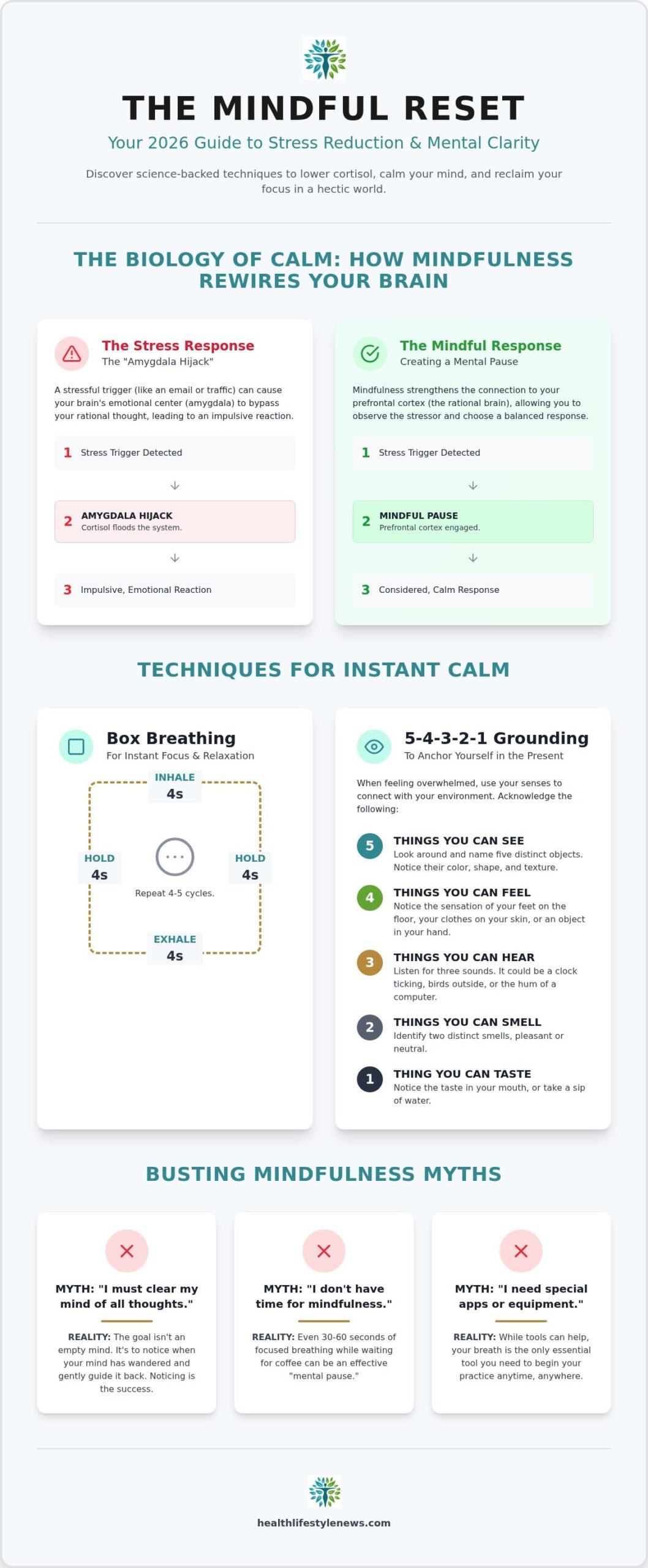
The biggest myth about mindfulness is that you need to clear your mind of all thoughts. That’s impossible. Your brain is designed to think, just like your heart is designed to beat. Success isn’t having a blank mind; it’s noticing when your mind has wandered and gently bringing it back to the present. You don’t need a quiet room, expensive cushions, or special equipment to start. Consider these common hurdles:
- The “I’m bad at this” feeling: If you feel like your mind is too busy, you’re actually doing it right. Noticing the distraction is the win.
- The time trap: Even thirty seconds of focused awareness while you’re waiting for the kettle to boil counts as a success.
- The equipment myth: While mindfulness apps or guided journals can be helpful companions, your breath is the only tool you truly need.
These small, accessible mindfulness techniques for stress reduction are often more effective than long sessions that you struggle to fit into your schedule. When you stop viewing mindfulness as a chore and start seeing it as a tool for vitality, it becomes a natural part of your day.
The Biology of Calm: How Mindfulness Rewires Your Stress Response
Stress isn’t just a feeling in your head; it’s a physical event that takes over your entire body. Deep inside your brain sits the amygdala, a tiny, almond-shaped structure that acts as your personal smoke detector. Its primary job is to spot danger. In our high-speed world, however, this detector often mistakes a passive-aggressive email or a traffic jam for a literal predator. This false alarm triggers a flood of cortisol, the body’s main stress hormone. When cortisol stays elevated for too long, it leads to the persistent brain fog and tension headaches many of us experience daily.
The good news is that your brain is remarkably adaptable. Through a process called neuroplasticity, you can actually grow your “calm muscles” by strengthening the neural pathways associated with relaxation. By consistently using mindfulness techniques for stress reduction, you’re not just relaxing in the moment; you’re physically remodeling your brain to be less reactive to pressure over time.
Taming the Amygdala Hijack
Have you ever snapped at a coworker or felt a sudden wave of panic during a routine meeting? That’s an “amygdala hijack.” Biologically, your emotional center has taken over, bypassing the prefrontal cortex, which is the logical, decision-making part of your brain. Mindfulness creates a critical gap between a stressful event and your reaction. In that small space, you regain control. Instead of an impulsive outburst, you’re able to observe the stress and choose a more balanced response. This shift allows your prefrontal cortex to stay online, keeping you grounded even when things get hectic.
Cortisol vs. Connection: The Hormonal Shift
Mindful breathing sends a direct signal to your nervous system that the immediate threat has passed. This simple act tells your brain to stop the production of stress hormones and start the recovery process. The long-term physical benefits are substantial, including lower blood pressure and improved immune function. Experts at Harvard Medical School suggest various relaxation techniques to reduce stress that help facilitate this biological transition from “fight or flight” to “rest and digest.”
The Vagus Nerve acts as the body’s internal cooling system for stress, physically slowing your heart rate when you engage in deep, mindful exhales. At Health Lifestyle News, we love tracking how these biological breakthroughs make wellness feel more achievable for everyone. Understanding the “why” behind your stress makes it much easier to commit to a daily practice that supports your long-term vitality.
5 Proven Mindfulness Techniques to Reduce Stress Today
Knowing the science of stress is one thing, but having a toolkit ready when your heart starts racing is where the real change happens. These practices aren’t meant to be long, grueling chores. Instead, they’re quick interventions that help you pivot from panic to peace in minutes. Medical experts at Harvard Health Publishing often highlight six relaxation techniques that can trigger the body’s natural recovery mode, and the following mindfulness techniques for stress reduction are among the most effective for a busy lifestyle.
Grounding Exercises for Immediate Relief
The 5-4-3-2-1 Grounding Technique is your go-to move for acute anxiety or a spiraling mind. It works by forcing your brain to switch from internal “what-if” loops to external sensory data. This engagement is the fastest way to exit a stress response. Use this while stuck in traffic, before a high-stakes meeting, or during a difficult conversation to stay anchored.
- 5 things you see: Look for small details, like a pattern on the wall or a shadow on the floor.
- 4 things you can touch: Notice the texture of your clothing or the cool surface of a desk.
- 3 things you hear: Listen for distant traffic, a ticking clock, or the hum of a computer.
- 2 things you can smell: Try to catch the scent of coffee or fresh air.
- 1 thing you can taste: Focus on the lingering flavor of mint or simply the inside of your mouth.
Mindful Breathing: Your Portable Stress Kit
Your breath is the only part of your autonomic nervous system you can consciously control. Most of us are “chest breathers” when stressed, which only fuels the fire. Switching to diaphragmatic “belly breathing” signals to your brain that the danger has passed. One high-performance favorite is Box Breathing. Inhale for a count of four, hold for four, exhale for four, and hold empty for four. If you’re struggling to sleep, try the 4-7-8 technique: inhale for four, hold for seven, and exhale slowly for eight. These simple shifts act as a physical override for your stress response.
Beyond breathing, try these three micro-practices to round out your day:
- Body Scan Lite: Spend three minutes scanning from your toes to your jaw. Notice where you’re holding tension and imagine it melting away with each exhale.
- Mindful Observation: Pick one object, like a pen or a leaf, and study it for 60 seconds as if you’ve never seen it before. It stops the clock on your racing thoughts.
- Loving-Kindness Micro-moments: When social stress hits, silently wish a stranger or a difficult coworker well. It sounds simple, but it’s a powerful way to reduce social friction and lower your own defensive guard.
At Health Lifestyle News, we recommend starting with just one of these techniques. You don’t need to master them all at once to feel the benefits of a calmer, more focused mind.
Overcoming Barriers: Mindfulness for the ‘Too Busy’ and ‘Too Distracted’
Many people feel they’re simply too busy for a new habit. If you’re juggling a career, family, and a social life, finding twenty minutes for silence can feel like another chore on an already long list. This is why “habit stacking” is a game-changer. Instead of carving out new time, you attach awareness to routines you already have, like brewing coffee or taking a shower. You aren’t adding a task; you’re changing how you experience the ones you already have. Pairing mindfulness with other health and wellness lifestyle tips can make it even easier to build a routine that truly sticks.
Digital mindfulness is another essential pillar in 2026. Your phone doesn’t have to be a source of stress. By using it intentionally rather than reactively, you reclaim your focus. Try a “one-breath reset” every time you pick up your device or transition between tasks. This small pause breaks the cycle of mindless scrolling and reminds your brain to stay in the present. Multitasking is actually a myth; it’s just your brain switching tasks rapidly, which increases cortisol. Single-tasking is one of the most effective mindfulness techniques for stress reduction because it allows your nervous system to settle into a rhythm.
Micro-Mindfulness: The 60-Second Strategy
You can find peace in the gaps of your day. Waiting for a file to upload or a kettle to boil is a perfect opportunity for a sixty-second check-in. This turns “dead time” into a recovery period. Try these micro-shifts:
- Mindful eating: Practice the “first three bites” rule. Focus entirely on the flavor, temperature, and texture of just the first three bites of your meal.
- Red light meditation: If you’re a commuter, see red lights as a cue to relax your jaw and shoulders rather than a frustrating delay.
- The transition breath: Take one deep, conscious breath before you walk through your front door after work to signal to your body that you’re home.
Dealing with the ‘Monkey Mind’
It’s normal for your thoughts to race when you try to be still. This is often called the “monkey mind.” Instead of fighting your thoughts, use the cloud metaphor. Imagine each thought is a cloud passing through a wide blue sky. Label it, “worrying,” “planning,” or “remembering,” and let it drift by without judgment. The real win in these mindfulness techniques for stress reduction is the moment you notice your mind has wandered. That moment of recognition is exactly how you build mental resilience. For more tips on staying grounded, visit Health Lifestyle News for our daily wellness news and guides.
Building a Sustainable Practice for Lifelong Wellness
Building a sustainable habit is the secret to moving from temporary relief to a transformed life. It’s easy to get discouraged if you miss a day or find your mind wandering during a session. Remember, the goal is progress, not perfection. Every time you return to the present moment, you’re succeeding. To help your brain settle, consider creating a small “mindfulness corner” or a simple daily ritual. Whether it’s lighting a specific candle or sitting in your favorite chair, these sensory cues signal to your nervous system that it’s safe to let down its guard.
Tracking your journey through journaling or mood-tracking apps makes the invisible benefits of these mindfulness techniques for stress reduction more tangible. You’ll start to notice patterns, like how a three-minute breathing exercise in the afternoon leads to a more patient evening with your family. Seeing this progress in writing provides the motivation needed to keep going when life gets hectic. This awareness helps you realize that you aren’t just “doing” mindfulness; you’re becoming a more mindful person.
Leveraging Technology: Apps and Wearables
In 2026, technology is a powerful ally for your mental health. Biofeedback devices are now more accessible than ever, allowing beginners to actually “see” their stress levels through heart rate variability data. This visual feedback turns an abstract feeling into a concrete metric you can improve. When choosing a mindfulness app, consider whether you prefer guided sessions for structure or unguided timers for silence. Most modern fitness trackers now include sophisticated stress-monitoring features that alert you when your cortisol might be spiking. At Health Lifestyle News, we regularly provide reviews and recommendations on the latest gadgets to help you find the tools that best fit your lifestyle.
The Long-Term Path to Vitality
Mindfulness doesn’t exist in a vacuum. It’s a foundational pillar that supports every other aspect of your well-being, from the quality of your sleep to how you fuel your body. When you’re less stressed, you make better nutritional choices and find more energy for physical activity. For a comprehensive approach, pairing your mindfulness practice with expert health and wellness advice for a balanced life can help you build a truly holistic routine that sustains your energy and focus throughout the year. This holistic approach is the key to sustainable healthy living. As your wellness companion, we’re here to provide the health news and trends you need to stay inspired. Reclaiming your inner calm is a journey; every mindful breath you take is a step toward a more vibrant, balanced version of yourself.
Your Path to a Calmer 2026
You’ve learned that these mindfulness techniques for stress reduction are more than just relaxation exercises; they’re tools for biological change. By taming the amygdala and lowering cortisol through simple grounding and breathing, you’re building a foundation for lasting emotional freedom. Success doesn’t require a mountain retreat. Instead, it happens in the sixty-second gaps of your already busy life, turning routine moments into opportunities for recovery and focus.
We want to help you stay inspired on this path to vitality. Our mission is to serve as your daily wellness companion, offering expert-backed wellness advice and comprehensive reviews of modern health gadgets to simplify your journey. Explore our latest reviews of the best fitness and wellness apps to support your practice! You’ll join a supportive community of wellness seekers who believe that small, healthy choices lead to a more vibrant life. You’ve got the tools and the knowledge now. It’s time to breathe deep and reclaim your calm.
Frequently Asked Questions
How long does it take for mindfulness to reduce stress?
You can feel the physiological benefits of mindfulness almost immediately. Just a few minutes of focused breathing can lower your heart rate and reduce cortisol levels. However, structural brain changes, such as a smaller amygdala or a thicker prefrontal cortex, typically take about eight weeks of consistent daily practice. Think of it like physical exercise; you feel better after one workout, but true transformation comes from making it a regular habit.
Can I practice mindfulness if I have ADHD or a very busy mind?
Absolutely, and it’s often especially helpful for those with ADHD or racing thoughts. Mindfulness isn’t about having a blank mind; it’s about noticing when your mind has wandered and gently bringing it back. For a busy mind, active mindfulness techniques for stress reduction, like walking meditations or sensory grounding, are often more effective than sitting in silence. These “anchor” activities give your brain a specific point of focus, making the practice feel much more achievable.
What is the difference between mindfulness and meditation?
Mindfulness is a state of being aware in the present moment, while meditation is the formal practice used to cultivate that state. You can be mindful while doing anything, like eating an apple or walking to your car. Meditation is like the “gym” where you specifically train your attention. While they’re closely related, you don’t have to meditate to be mindful, though a regular meditation habit makes staying mindful during a stressful day much easier.
Is there a ‘best’ time of day to practice mindfulness techniques?
The best time is whenever you can consistently fit it into your schedule. Many people prefer the morning to set a calm tone for the day, while others use it in the evening to wind down for better sleep. If you have a high-pressure job, practicing during transitions, like the “red light meditation” mentioned earlier, can prevent stress from building up. The key is finding a rhythm that feels like a reward rather than a chore.
What happens if I fall asleep during a mindfulness exercise?
Falling asleep is a common occurrence, especially during relaxation-heavy practices like body scans. It simply means your body was in need of rest and felt safe enough to drift off. While the goal of mindfulness is usually “relaxed alertness,” falling asleep isn’t a failure. If it happens often and you want to stay awake, try practicing in a more upright position or at a time of day when you’re naturally more energetic.
Do I need to sit in a specific posture for mindfulness to work?
You don’t need to sit in a lotus position or even on the floor for mindfulness to be effective. The most important thing is to be comfortable and alert. You can practice while sitting in a chair with your feet flat, standing in line, or even lying down. If you’re using mindfulness techniques for stress reduction during a busy workday, simply uncrossing your legs and relaxing your shoulders while at your desk is a great way to start.
Can kids or teenagers benefit from these stress reduction techniques?
Children and teenagers can see significant benefits, particularly in emotional regulation and focus. Research shows that simple practices like “belly breathing” or “mindful listening” help younger people manage school-related anxiety and social pressures. For kids, it’s often helpful to keep sessions very short, perhaps just sixty seconds, and make them playful. These early skills build a foundation of resilience that serves them well into adulthood, helping them navigate a high-tech, high-speed world.
Is mindfulness a religious practice?
While mindfulness has roots in ancient contemplative traditions, modern mindfulness is a secular mental training supported by neuroscience. It doesn’t require any specific religious beliefs or spiritual affiliations. Today’s practices focus on the biological and psychological benefits of present-moment awareness, such as lowering blood pressure and improving mental clarity. It’s an accessible tool for anyone, regardless of their background, who wants to improve their mental well-being and reclaim a sense of inner calm.