Maintaining skeletal integrity requires more than just calcium intake; it demands mechanical loading to stimulate bone remodeling. As we age, the balance between bone resorption and bone formation shifts, often leading to decreased density. Implementing targeted movement patterns is essential for slowing this decline and improving structural stability. By applying controlled stress to the skeleton, you can encourage osteoblasts to deposit new mineral tissue, effectively strengthening your frame over time.
Quick Summary
Weight-bearing exercises are physical activities that force your body to work against gravity, triggering osteogenesis to maintain or increase bone density. These routines are crucial for managing osteoporosis, preventing fractures, and improving overall mobility through controlled, high-impact or resistance-based movements.
- Perform weight-bearing movements at least 3-4 times per week.
- Combine resistance training with impact exercises for maximal results.
- Prioritize balance and posture to minimize fall risks.
- Consult a healthcare provider before beginning high-intensity programs.
Table of Contents
- Understanding Bone Loading Mechanics
- Safe Weight Bearing Exercises for Osteoporosis at Home
- Principles of Weight Lifting for Osteoporosis
- How to Keep Knees Healthy During Training
- Common Pitfalls & Troubleshooting
- FAQ
- Recommended Reads
Understanding Bone Loading Mechanics
Bone is a dynamic, living tissue that responds to the demands placed upon it according to Wolff’s Law. When you perform weight-bearing exercises for bone health, the mechanical strain generated at the bone-muscle interface signals the body to reinforce the stressed areas. This process is highly specific; bone density increases primarily in the regions experiencing the highest mechanical load, which is why a variety of movements targeting different parts of the skeleton is necessary.
For those managing osteoporosis, the goal is to engage in activities that provide sufficient strain without exceeding the bone’s structural capacity. This balance is delicate. While high-impact activities like running can be beneficial for younger populations, those with established osteoporosis may need to focus on lower-impact weight-bearing exercises for bone health, such as brisk walking, dancing, or controlled resistance training, to stimulate growth while protecting against acute fractures.
Safe Weight Bearing Exercises for Osteoporosis at Home
Building a home-based routine requires focus on both vertical loading and balance. Start by incorporating simple, gravity-defying movements that do not place excessive torque on the spine. Gentle heel drops – rising onto your toes and dropping down onto your heels – provide a low-impact pulse that sends a mechanical signal to the femur and hips.
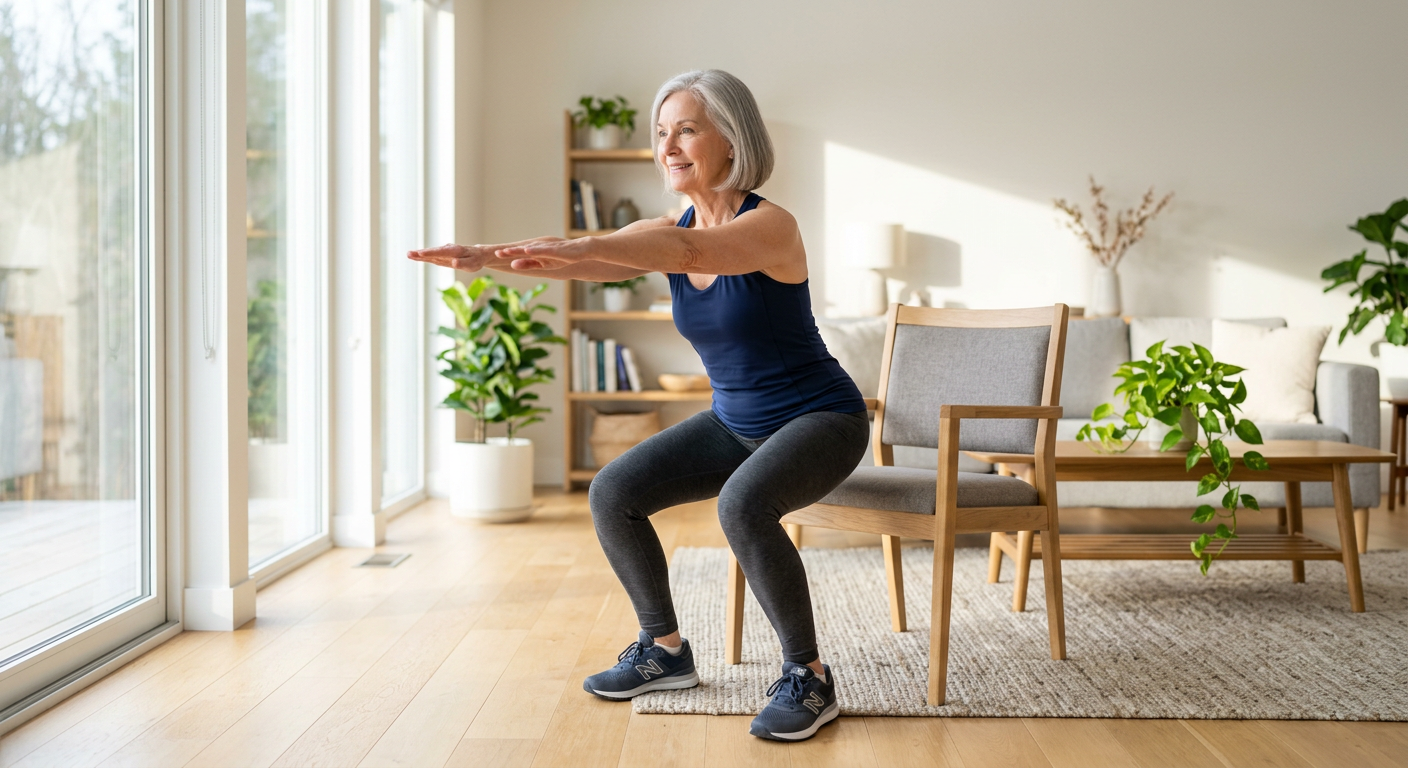
Transitioning to functional movements is the next step. Squats (performed to a chair for safety) and standing calf raises are effective weight-bearing exercises for osteoporosis at home. These movements utilize your own body mass as the primary load. Always maintain a neutral spine and ensure your environment is clear of tripping hazards to prioritize safety alongside efficacy.
Pro Tip: When performing home routines, utilize a sturdy, non-wheeled chair to maintain proper form during squats. This ensures your weight is correctly distributed and prevents excessive strain on the lumbar region.
Principles of Weight Lifting for Osteoporosis
Weight lifting for osteoporosis is not about maximal strength in the traditional sense; it is about controlled, progressive tension. Utilizing free weights or resistance bands allows you to apply force directly to the bones of the arms, shoulders, and hips. The key is to start with light loads, focusing on perfect technique before gradually increasing the resistance over several weeks.
Focus on compound movements that recruit multiple muscle groups, such as overhead presses, rows, and deadlifts (performed with a kettlebell or light barbell). These lifts engage the long bones and the spine, providing the compression required for bone maintenance. Remember that muscle strength is a proxy for bone strength; as the muscles become stronger, they exert more pull on the bone, further stimulating density improvements.
How to Keep Knees Healthy During Training
Joint health is a major concern when increasing physical activity, particularly for those over 40. Knowing how to keep knees healthy involves maintaining the strength of the quadriceps and hamstrings, which act as shock absorbers for the knee joint. Strengthening these muscles ensures that your knees are supported during weight-bearing exercises, reducing the risk of inflammation.
Avoid locking your knees during standing exercises and prioritize smooth, controlled motions over explosive ones. If you experience persistent joint discomfort, switch to low-impact alternatives or use compression sleeves during your sessions. Warming up properly with dynamic movements – such as gentle leg swings – before starting your primary routine is also vital for joint lubrication.
Common Pitfalls & Troubleshooting
One of the most common errors is overtraining too early. Rapidly increasing load can lead to stress reactions in the bone rather than adaptation. If you feel localized, sharp pain during or after exercise, reduce the volume or intensity immediately. Consistency over years is significantly more effective than intensity over weeks.
Another pitfall is neglecting balance training. Falling is the primary cause of fracture for those with osteoporosis. Integrate balance exercises, such as single-leg stands or tandem walking, into your daily routine. If you feel unsteady, always have a support surface nearby, such as a countertop, to catch yourself if needed.
FAQ
Is running safe for someone with osteoporosis?
High-impact activities like running can be beneficial for bone density, but they may be contraindicated if you have severe osteoporosis or a history of spinal fractures. Consult your physician to determine if your bone density levels permit high-impact loading.
How often should I perform these exercises?
For optimal bone remodeling, aim for 3-4 sessions per week. Bones require time to recover after the micro-damage caused by weight-bearing loads, so avoid back-to-back days of high-intensity training.
Do I need to buy expensive gym equipment?
Not at all. You can achieve excellent results using body weight, gravity-based movements, and inexpensive tools like resistance bands or small hand weights found at home.
Can weight-bearing exercise reverse osteoporosis?
While exercise may not fully reverse the condition, it can significantly improve bone density and structural integrity, reducing the risk of future fractures and improving quality of life.
Recommended Reads
- 10 Essential Health and Wellness Lifestyle Tips for 2026
- Can Barefoot Walking Really Reduce Stress According to Research?