

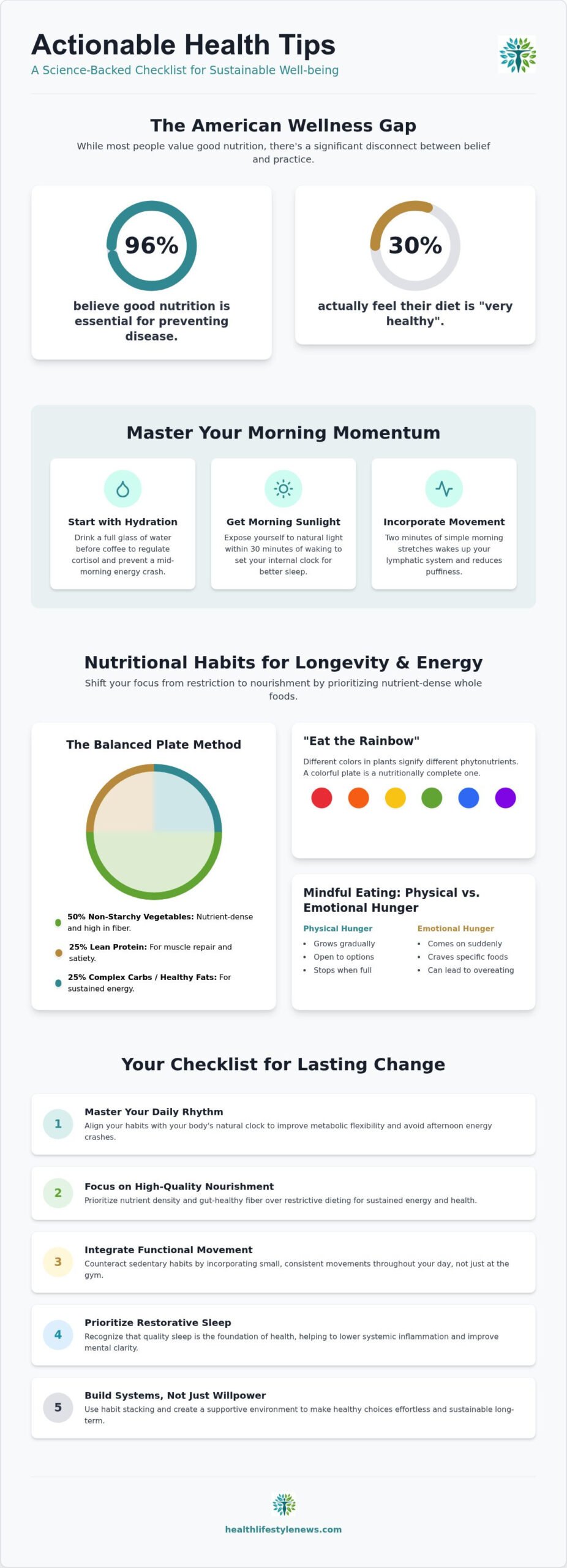
Did you know that while 96% of Americans believe good nutrition is essential for preventing disease, only 30% actually feel their diet is “very healthy”? This massive gap isn’t because you don’t care about your well-being. It’s because the constant stream of conflicting advice and high-pressure trends makes it feel impossible to keep up. You’ve likely felt the frustration of starting a new routine only to have it crumble under the weight of a busy schedule, leaving you feeling more burnt out than before. It’s time to simplify your approach with actionable health tips for healthy living that actually stick.
This article provides a clear, science-backed checklist designed to help you build a vibrant lifestyle without the usual overwhelm. We’re moving away from complicated metrics and focusing on the core 2026 guidelines, like the “eat real food” movement and the importance of nervous system regulation. You’ll discover how small, daily shifts in your nutrition, movement, and sleep can lead to lasting energy and mental clarity. By the end of this guide, you’ll have a manageable roadmap to take back control of your long-term health and feel your best every single day.
Key Takeaways
- Learn how to master your daily rhythm so you don’t crash in the afternoon while improving your metabolic flexibility.
- Shift your focus from restrictive dieting to high-quality nourishment by prioritizing nutrient density and gut-healthy fiber.
- Discover how to integrate functional movement into your routine to counter active sedentary habits with practical health tips for healthy living.
- Understand why restorative sleep is the essential foundation of your health and how it helps lower systemic inflammation.
- Build lasting change by using habit stacking and systems since you can’t always rely on finite willpower to reach your goals.
The Foundations of a Healthy Daily Routine
Healthy living isn’t a rigid set of rules or a temporary fix. It’s a balance of physical, mental, and nutritional consistency that allows your body to function at its peak. When you look at the principles of Lifestyle Medicine, you see that health is about the small things you do every single day. One of the most effective health tips for healthy living is to focus on metabolic flexibility. This is your body’s ability to switch between burning carbohydrates and burning fat efficiently. When you align your habits with your natural daily rhythms, you support this flexibility, which keeps your energy stable and your mind sharp.
You don’t need to be perfect to see massive results. Apply the 80/20 rule: focus on the 20% of habits that drive 80% of your health outcomes. Instead of stressing over every minor detail, focus on consistent sleep, whole foods, and daily movement. Sustainable Healthy Living is a lifestyle that prioritizes long-term vitality over short-term restriction.
The Power of Morning Momentum
Your morning sets the chemical tone for the rest of the day. Before you reach for the coffee pot, drink a full glass of water. Early hydration helps regulate cortisol levels, which naturally peak when you wake up. Caffeine on an empty stomach can spike stress hormones too early, leading to a mid-morning crash. Next, try to get natural sunlight exposure within 30 minutes of waking. This signals your brain to stop producing melatonin and start the internal clock for better sleep tonight. Add in two minutes of simple morning stretches. This wakes up your lymphatic system, helping your body process waste and reducing morning puffiness.
Designing Your Personal Health Environment
Willpower often fails when you’re tired, so design your space to do the heavy lifting for you. Start in the kitchen by placing healthy staples like nuts, seeds, and fruit at eye level while tucking processed snacks out of sight. This simple nudge makes the better choice the easier choice. Digital detoxing is another essential part of a healthy environment. Put your phone away during meal times to practice mindful eating and keep it out of the bedroom to protect your sleep quality. Finally, keep your workspace tidy. A clean desk isn’t just about aesthetics; it lowers cognitive load, which reduces stress and supports better heart health over time. These practical health tips for healthy living ensure your surroundings support your goals rather than working against them.
Nutritional Habits for Longevity and Energy
Stop thinking about what you need to cut out and start thinking about what you can add in. Moving from a mindset of restrictive dieting to one of active nourishing is one of the most powerful health tips for healthy living. This means prioritizing nutrient density, where every calorie provides vitamins, minerals, and antioxidants. A key player here is dietary fiber. Fiber isn’t just for digestion; it’s the primary fuel for your gut microbiome and a critical tool for keeping your blood sugar stable throughout the day. When your gut is healthy, your energy levels usually follow suit.
Hydration is arguably the most overlooked nutrient in the modern diet. Even mild dehydration can lead to brain fog, fatigue, and false hunger signals that drive unnecessary snacking. To keep your meals balanced, use the Plate Method by filling half your plate with non-starchy vegetables, one-quarter with lean protein, and the final quarter with complex carbohydrates or healthy fats. For more evidence-based strategies on maintaining this balance, you can explore the Physical Wellness Toolkit from the NIH.
Prioritizing Whole Foods over Ultra-Processed Options
Ultra-processed foods are often engineered to be overeaten, hiding sugars under dozens of different names. Checking labels is vital, even on items marketed as “healthy,” to ensure you aren’t consuming empty calories. Instead, focus on anti-inflammatory fats like Omega-3s found in fatty fish, flaxseeds, and walnuts to support brain health. The easiest way to ensure you’re getting a full spectrum of micronutrients is to “eat the rainbow.” Different colors in plants represent different phytonutrients, so a colorful plate is a nutritionally complete one. If you want to stay updated on the latest nutritional research, checking Health Lifestyle News daily can help you stay informed.
The Science of Mindful Eating
Your brain needs time to register that you’re full. Chewing slowly doesn’t just prevent overeating; it actually improves nutrient absorption by breaking down food more effectively before it hits your stomach. It’s also important to recognize the difference between emotional hunger, which comes on suddenly and targets specific comfort foods, and physical hunger, which grows gradually. Some find success with “windowed eating,” which is simply keeping your meals within a consistent 10 or 12-hour timeframe. This gives your digestive system a predictable rest period, which can significantly improve your metabolic health and overall digestion. Using these health tips for healthy living helps you build a relationship with food that sustains you long-term.
Movement and Physical Vitality Beyond the Gym
Movement is life. While hitting the gym for an hour is great, sitting for the remaining eight hours can undo many of those benefits. This phenomenon, often called “active sedentary” behavior, is a growing concern. According to 2024 CDC data, only 47.2% of adults meet federal guidelines for aerobic activity. To truly thrive, we must redefine exercise as functional movement that supports our daily lives. Finding practical health tips for healthy living often starts with changing how you view your workout. It isn’t just about the mirror; it’s about maintaining the muscle mass that serves as a key predictor of longevity as you age.
Muscle mass naturally declines over time, but consistent resistance training keeps your metabolic rate high and your bones strong. If you’re unsure where to begin, looking for a beginner’s guide to fitness can help you build a safe and effective foundation. The goal is to move your body in ways that make everyday tasks, like carrying groceries or climbing stairs, feel effortless.
Incorporating “Movement Snacks” into Your Day
You don’t need a 60-minute block of time to improve your health. “Movement snacks,” or short bursts of activity, can be incredibly effective. A simple five-minute walk after meals helps manage glucose levels and prevents that heavy, post-lunch fatigue. You can also increase your Non-Exercise Activity Thermogenesis (NEAT) by using a standing desk or taking walking meetings. Even while watching TV, you can perform simple bodyweight movements like squats or calf raises. These small additions keep your circulation flowing and your metabolism active throughout the day.
The Role of Strength and Flexibility
Current health standards recommend muscle-strengthening activities at least two days per week. This isn’t just for bodybuilders. Resistance training is essential for maintaining bone density and preventing the metabolic slowdown that often comes with age. However, strength must be balanced with mobility. Dedicated mobility work helps prevent injury and chronic pain by ensuring your joints can move through their full range of motion. Try to balance high-intensity sessions with restorative movement like yoga or deep stretching. This holistic approach ensures your body remains both powerful and resilient, allowing you to stay active for decades to come. These health tips for healthy living focus on building a body that works for you, not against you.
Mental Wellness and Restorative Sleep Pillars
Sleep isn’t just a luxury or the “roof” of your wellness house; it’s the foundation of the entire health pyramid. While we often focus on what we eat or how we move, your body performs its most critical repairs during deep sleep. Without 7 to 9 hours of quality rest, your brain can’t clear out metabolic waste, and your muscles can’t fully recover from daily activity. In fact, your mental state is the primary driver of your physical choices. When you’re sleep-deprived, the logical part of your brain goes offline, making it nearly impossible to stick to nutritional goals or find the motivation for movement. Integrating mental wellness into your health tips for healthy living is essential because a stressed mind often leads to a neglected body.
Chronic stress creates a physiological chain reaction that leads to systemic inflammation, which is a major contributor to the chronic diseases affecting over 60% of American adults. To combat this, you must prioritize sleep hygiene. Sleep hygiene refers to a set of environmental and behavioral practices that promote consistent, uninterrupted rest, such as maintaining a cool bedroom temperature, sticking to a regular wake-up time, and avoiding digital screens an hour before bed. To learn more about the science of rest, check out the latest updates at Health Lifestyle News.
Optimizing Your Circadian Rhythm
Your body operates on a 24-hour internal clock known as the circadian rhythm. This rhythm is highly sensitive to light, especially the blue light emitted by smartphones and laptops. Blue light suppresses melatonin production, the hormone that tells your brain it’s time to sleep. To protect your sleep quality, create a “wind-down” ritual that signals the brain to prepare for rest. This might include reading a physical book, taking a warm bath, or practicing light stretching. Your environment also matters. The ideal bedroom should be cool, around 65 degrees Fahrenheit, pitch black, and quiet or filled with steady white noise to prevent disruptions.
Stress Management Techniques for Busy Lives
A major wellness trend in 2026 is the shift toward nervous system regulation. You can immediately calm your “fight or flight” response using the 4-7-8 breathing technique: inhale for four seconds, hold for seven, and exhale slowly for eight. Beyond breathing, spending time in green spaces, a practice often called “forest bathing,” has been shown to lower cortisol and improve mood. Don’t overlook the power of social connection. Meaningful relationships and community involvement are scientifically proven health tips for healthy living that contribute to a longer, happier life. These small, daily mental shifts ensure that your healthy lifestyle is built on a foundation of genuine well-being rather than just physical exertion.
Building Sustainable Habits: Making the Checklist Stick
Knowing what to do is only half the battle. The real challenge is making those choices when life gets loud and your energy is low. Many people fail not because they lack desire, but because they rely too heavily on willpower. Willpower is a finite resource; it’s like a battery that drains as the day goes on. To succeed, you need systems instead of just effort. One of the best health tips for healthy living is habit stacking. This involves taking a new habit and anchoring it to something you already do. For example, do your morning stretches while the kettle boils or practice your 4-7-8 breathing during your evening commute. By attaching new behaviors to existing ones, you reduce the mental energy required to get started.
Perfectionism is often the biggest enemy of a healthy lifestyle. If you wait for the perfect day to start, you’ll never begin. Instead of trying to overhaul your entire life at once, pick just two tips from this checklist to implement this week. Maybe it’s drinking water before coffee and taking a five-minute walk after lunch. Starting small reduces the friction of change and makes the process feel achievable rather than exhausting. For a broader perspective on building these routines, exploring expert health and wellness advice for a balanced life in 2026 can provide additional science-backed strategies to complement your journey.
The Power of Small Wins
Success is built on a 1% improvement daily. While it might not seem like much in the moment, these small shifts lead to massive long-term transformations over months and years. To stay motivated, track your progress without becoming obsessed with the numbers. Use a simple journal or a wellness app to log your consistency. Focus on celebrating non-scale victories like waking up with more energy, feeling less bloated, or noticing a steadier mood throughout the day. These are the true indicators that your new routine is working for your unique body. You can find reviews of helpful tracking tools and apps on Health Lifestyle News to see what fits your style.
Overcoming Common Obstacles
Life isn’t always predictable, and your routine shouldn’t be so rigid that it breaks when you travel or have a busy work week. When your schedule gets packed, aim for the “minimum effective dose.” If you can’t get to the gym, do five minutes of bodyweight movements in your living room. You might also face social pressure when you start changing your habits. Be firm but kind about your choices; most people will respect your dedication once they see your improved vitality. Finally, practice self-compassion on “off” days. One missed workout or processed meal won’t ruin your progress. What matters is how quickly you return to your supportive health tips for healthy living. Your health is a long-term journey, not a sprint to a finish line.
Take Charge of Your Wellness Journey
Building a vibrant lifestyle isn’t about achieving perfection overnight. It’s about the steady accumulation of small, intentional choices. By focusing on metabolic flexibility and prioritizing nutrient-dense whole foods, you’ve already laid the groundwork for lasting energy. Remember that movement doesn’t have to happen in a gym to count; functional activity throughout your day is what keeps your body resilient as you age. When you combine these physical habits with restorative sleep and stress management, you create a foundation that supports every other part of your life. These health tips for healthy living are most effective when you stop relying on willpower and start leaning on simple systems like habit stacking.
You don’t have to navigate these changes alone. We’re here to help you stay informed with evidence-based nutrition guides and expert-reviewed fitness recommendations that fit into your busy schedule. Joining a supportive community for sustainable living makes the transition feel less like a chore and more like an inspiring new chapter. Explore our latest Health News and Trends to stay ahead of your wellness goals! Your path to a healthier, more energized self starts with the very next choice you make today. You’ve got this.
Frequently Asked Questions
What are the most important daily health tips for beginners?
The most effective starting point is focusing on hydration, whole foods, and consistent sleep. Begin by drinking a full glass of water upon waking and aiming for 7 to 9 hours of rest each night. Beginners should prioritize these high-impact health tips for healthy living to build a solid foundation. Don’t try to overhaul your entire life at once; instead, pick two habits and master them before adding more.
How can I stay healthy with a very busy schedule?
Efficiency is key when your calendar is full. Use “movement snacks” like five-minute walks after meals or standing during phone calls to stay active without needing a gym. Meal prepping on weekends ensures you have nutrient-dense options ready when you’re tired. Prioritizing sleep is actually your best productivity hack, as it keeps your brain sharp and helps you make better nutritional choices throughout a demanding day.
Is it possible to live a healthy lifestyle on a budget?
Yes, healthy living doesn’t require expensive superfoods or boutique fitness memberships. Focus on pantry staples like beans, lentils, and oats, which are high in fiber and very affordable. Buy frozen vegetables to get the same nutrients as fresh ones at a lower cost. For exercise, utilize free resources like local parks or bodyweight workout videos. Living well is about consistency with basic whole foods rather than high-cost trends.
How much water should I actually drink every day for optimal health?
While the “eight glasses” rule is common, your needs depend on your activity level and climate. A good general target is about 11.5 cups for women and 15.5 cups for men from all beverages and foods. Pay attention to your body’s signals; if your urine is light yellow, you’re likely well-hydrated. Proper hydration is one of the most effective health tips for healthy living because it regulates energy and prevents false hunger.
What is the best time of day to exercise for maximum benefits?
The best time to exercise is whenever you can do it consistently. Morning workouts can jumpstart your metabolism and ensure you don’t skip it later, while afternoon sessions often benefit from higher body temperatures and better peak performance. Listen to your circadian rhythm; if you’re a night owl, an evening walk might feel better than a 6 AM run. The consistency of the habit matters much more than the clock.
Can mental health affect my physical health goals?
Absolutely, as your mind and body are deeply connected through the nervous system. Chronic stress increases systemic inflammation and spikes cortisol, which can lead to weight gain and poor sleep. When your mental health is a priority, you’re more likely to have the cognitive energy to choose whole foods and stay active. Practices like mindful breathing help keep your stress levels in check, supporting your physical progress and overall vitality.
How do I know if my new health habits are actually working?
Look beyond the scale for “non-scale victories” to see real progress. You’ll likely notice improved energy levels, better mood stability, and more restorative sleep within the first few weeks. Clearer skin and better digestion are also strong indicators that your body is responding well to your new routine. If you feel more capable of handling daily stress without burning out, your sustainable habits are definitely making a measurable difference.
What are the first signs of a successful lifestyle change?
The first sign of success is when healthy choices start to feel automatic rather than forced. You might find yourself reaching for water instead of soda or looking forward to your daily walk. Another sign is improved metabolic flexibility, meaning you don’t experience those sharp energy crashes in the afternoon. When these choices become part of your identity rather than a temporary chore, you’ve successfully shifted your lifestyle toward long-term vitality.