
What if the secret to a healthier life isn’t a grueling 5:00 AM workout or a restrictive juice cleanse? Most of us have been there. You start a new health kick with high hopes, only to find yourself exhausted and overwhelmed by the third day. It’s frustrating when the very things meant to make you feel better end up causing more stress. You likely feel like there isn’t enough time in the day to manage a complex routine, especially when you’re bombarded with conflicting information at every turn.
The good news is that true health doesn’t have to be a second job. In this guide, you’ll learn how to transform those intimidating goals into simple, daily wellness tips that feel natural rather than forced. We’ll show you how to leverage the latest insights, from functional nutrition to wearable technology, to create a plan that fits your unique lifestyle. We’ll walk through a step-by-step approach to building micro-habits that increase your energy and reduce stress without the burnout of past failures. It is time to stop overcomplicating your health and start enjoying a routine that actually sticks.
Key Takeaways
- Shift your mindset from temporary health kicks to a proactive, long-term lifestyle that prioritizes daily vitality.
- Discover how the “Wellness Quadrant” connects sleep, nutrition, movement, and mindset to create a balanced foundation.
- Learn how to use habit stacking and small wellness tips to build momentum without needing a total life overhaul.
- Identify your personal “Keystone Habit” by auditing your current energy levels and time commitments for maximum impact.
- Build resilience with a “Plan B” framework that helps you maintain your routine during busy schedules or unexpected setbacks.
What Is a Wellness Routine and Why Does It Matter?
Wellness isn’t just about avoiding a cold or managing a chronic condition. It’s a proactive choice to thrive. While health is often viewed as the absence of illness, wellness is the active pursuit of activities and choices that lead to a state of holistic health. A wellness routine is a personalized set of daily actions that support physical, mental, and emotional vitality.
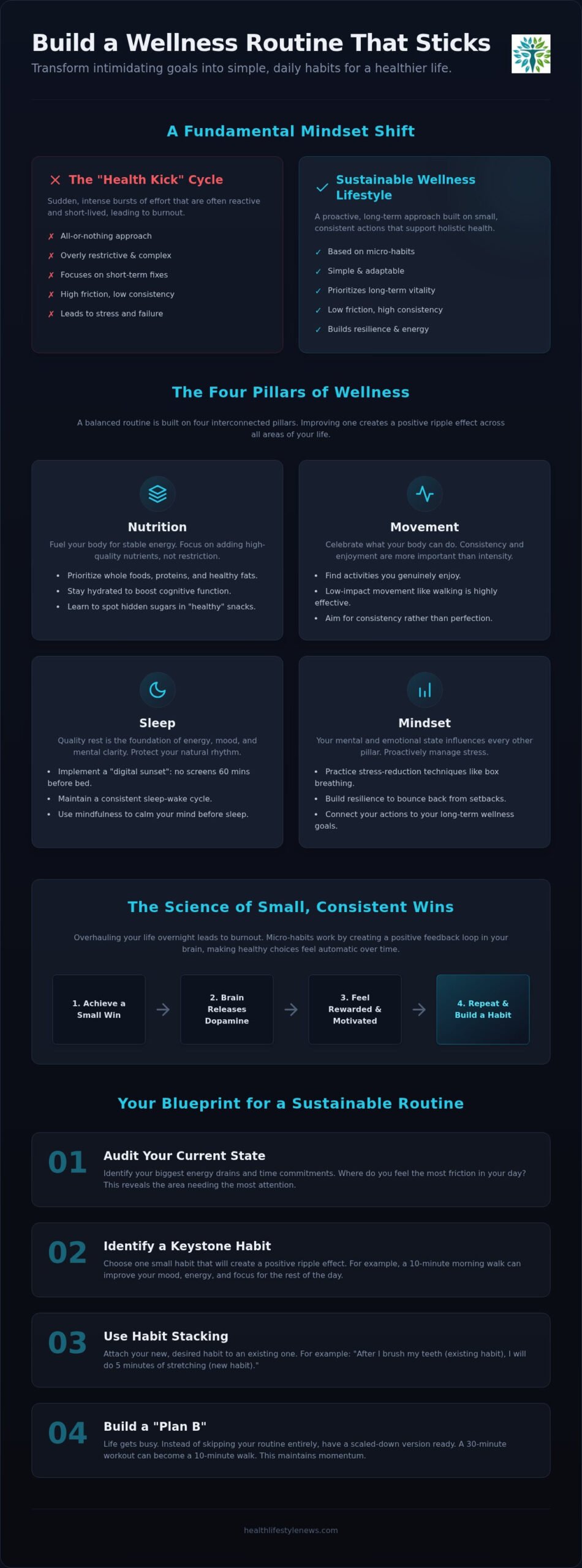
We’ve all seen the “health kick” cycle. It usually involves a sudden, intense burst of effort, like a restrictive diet or a seven-day-a-week gym plan. These are often reactive and short-lived. A sustainable wellness lifestyle, however, is built on consistency. It focuses on long-term benefits that change your daily experience:
- Improved Resilience: Your body and mind bounce back faster from stress and environmental challenges.
- Higher Energy: You stop relying on caffeine to get through the afternoon slump because your body has natural fuel.
- Disease Prevention: Proactive habits reduce long-term risks by keeping your systems in balance.
By integrating simple wellness tips into your day, you build a foundation that lasts years, not weeks. This approach moves you away from the stress of “fixing” yourself and toward a lifestyle of continuous growth.
The Difference Between Health and Wellness
Health refers to your biological state, often measured by numbers like blood pressure or heart rate. Wellness is the lifestyle choice you make to influence those numbers. When you focus on wellness, you’re practicing “active vitality.” This means you aren’t just waiting for a doctor’s appointment to check in on your body. You’re making intentional decisions every day that lead to more consistent and predictable health outcomes. It’s the difference between being “not sick” and feeling truly alive.
The Science of Small Changes
Why do most routines fail by week three? It’s usually because of the “all-or-nothing” approach. When you try to overhaul your entire life overnight, your brain resists the sudden friction, leading to burnout. Science suggests a better way through neuroplasticity. This is your brain’s ability to form new neural pathways through repetition. When you achieve small wins, your brain releases dopamine. This chemical triggers a sense of reward and keeps you motivated to continue. Instead of a massive overhaul, focus on micro-habits and practical wellness tips that feel easy to accomplish. Over time, these small actions rewire your brain to make healthy choices feel like second nature.
The Four Pillars of a Balanced Wellness Lifestyle
To build a routine that lasts, we look at what I call the Wellness Quadrant. This framework consists of four essential pillars: Nutrition, Movement, Sleep, and Mindset. These aren’t isolated silos. They’re deeply interconnected. If you get poor sleep, your body craves quick energy, leading to poor food choices. Likewise, a stressed mindset can make even a light workout feel like a chore. You don’t need to master all four at once. Start by identifying which pillar currently needs the most love. Focusing on one area creates a positive ripple effect, helping these wellness tips feel like a natural part of your day.
Nutrition and Mindful Eating
Forget the idea of restriction. Instead, focus on adding high-quality nutrients like the proteins and healthy fats recommended in the 2025-2030 Dietary Guidelines. Hydration is equally vital. Even mild dehydration can tank your cognitive function and energy levels. One of the best wellness tips is to learn how to spot hidden sugars in “healthy” snacks. Many granola bars or yogurts are packed with refined carbohydrates that lead to energy crashes. You can check our natural remedy guides to find whole-food alternatives that support your gut health and keep your energy stable.
Movement That Feels Good
Exercise shouldn’t be a punishment for what you ate. It’s a celebration of what your body can do. If high-intensity gym sessions feel draining, try low-impact activities like walking or stretching. These movements still provide significant cardiovascular benefits without the high cortisol spike. The goal is to find a routine that matches your personality. If you’re social, a group class might work. If you crave quiet, a solo morning walk is perfect. Consistency comes from enjoyment, not force.
Sleep Hygiene and Mental Clarity
Your circadian rhythm regulates everything from your mood to your hunger hormones. To protect it, try a “digital sunset.” Turn off screens 60 minutes before bed to allow your natural melatonin production to kick in. Poor sleep quality is a major driver of daily stress. You can reduce cortisol levels by incorporating simple mindfulness techniques, like box breathing, into your evening routine. This mental reset ensures you wake up with the clarity needed to tackle your day with intention.
Micro-Habits vs. Massive Overhauls: Choosing Your Strategy
Many people approach health like a New Year’s Resolution. They attempt a massive overhaul, changing their diet, sleep, and exercise all at once. This “all-or-nothing” strategy often leads to high stress and low retention. By contrast, the “1% Better” style focuses on micro-habits. These are tiny, manageable shifts that don’t trigger the brain’s natural resistance to change. While rapid change feels exciting at first, it’s rarely sustainable. Slow progress allows your lifestyle to adapt naturally, ensuring your new wellness tips actually stick for the long haul.
| Feature | Massive Overhaul | Micro-Habit Strategy |
|---|---|---|
| Stress Level | High | Low |
| Retention Rate | Low (usually ends by week 3) | High (long-term sustainability) |
| Time Required | Significant daily commitment | Minimal (often under 10 minutes) |
| Brain Impact | Triggers “fight or flight” resistance | Builds new neural pathways |
Choosing micro-habits means you value consistency over intensity. You aren’t trying to run a marathon on day one. Instead, you’re looking for the smallest possible action that moves the needle. This approach respects your time and energy, making it much harder to quit when life gets busy. It’s about building a foundation that supports you, rather than a rigid schedule that drains you.
How to Use Habit Stacking
The most effective way to introduce a new habit is to “stack” it onto something you already do. Identify your “anchor habits,” such as brushing your teeth, making your morning coffee, or checking the mail. By attaching a new action to an existing one, you remove the need for constant willpower. For example, while your coffee brews, you could do five minutes of light stretching. If you’re looking for more ways to integrate health into your day, our wellness tips often focus on these seamless transitions. The window between activities is the perfect time for new habits because your brain is already in a state of “what’s next.”
Avoiding the “Perfection Trap”
Consistency is more important than intensity. A ten-minute walk is always better than a skipped one-hour gym session. To stay on track, adopt the “Never Miss Twice” rule. Life happens. You might miss a day, and that’s okay. The goal is to ensure you don’t miss the second day. This prevents a single slip-up from turning into a total collapse of your routine. Re-frame “failure” as a data point. If a habit feels too hard to maintain, it isn’t a personal failing; it’s a sign that the habit needs to be even smaller. Adjust your routine until it feels natural, not forced.
Your Step-by-Step Guide to Creating a Sustainable Routine
Building a routine shouldn’t feel like guesswork. It requires a methodical approach that respects your current reality. Instead of following a generic calendar, use these wellness tips to build a customized plan that works for your life. Start small. Focus on consistency over intensity.
Step 1: The Personal Wellness Audit
Start with a personal wellness audit. Ask yourself: When do I feel most tired? When am I most stressed? Look for “time leaks,” like mindless scrolling or inefficient chores, that could be reclaimed for health. To get started, list three specific self-care goals you want to achieve this week. This audit helps you understand where you have the most room for improvement without adding extra pressure to your schedule.
Step 2: Choosing Your Keystone Habit
Next, pick one “Keystone Habit.” These are behaviors that naturally make other healthy choices easier. For instance, focusing on better sleep or hydration often makes every other habit feel easier to manage. Make your habit “too small to fail,” like drinking one glass of water immediately upon waking. Write down your “Why” for this habit to keep your motivation grounded in purpose. If you know exactly why you’re making a change, you’re much more likely to stick with it when things get difficult.
Step 3: Environment Design
Your environment often dictates your behavior more than your willpower. Prepare your space by putting your gym shoes by the door or a water bottle on your desk. Remove friction for good habits and add it for bad ones. If you’re looking for the right tools to track your progress, check out our product reviews and recommendations for vetted wellness apps and gadgets. Using the right tools can simplify your journey and provide the visual cues your brain needs to stay on track.
Step 4: Define your Minimum Viable Action. This is the easiest, most basic version of your habit that you can perform even on your most chaotic day. If your goal is a 30-minute walk, your MVA might be simply putting on your shoes and walking to the end of the driveway. This ensures you keep the streak alive without the pressure of a full session.
Step 5: Review and adjust. After seven days, look back at your progress. Be honest about what worked and what didn’t. Adjust your routine based on your actual experience rather than your initial expectations. This cycle of review and adjustment is what turns a temporary attempt into a permanent lifestyle.
Overcoming Obstacles and Maintaining Momentum
Even the most dedicated routine faces challenges. Social pressure, a sudden illness, or a chaotic work week can easily derail your progress if you aren’t prepared. The key to long-term success isn’t avoiding these obstacles but having a strategy to handle them. When life gets in the way, switch to a “Plan B” framework. This involves pre-determining a scaled-back version of your habits so you can maintain your streak without the stress of a full routine. Consistency, even at a lower intensity, keeps your neural pathways active and prevents the “start-over” cycle.
Community and accountability also play a massive role in staying on track. Sharing your goals with a friend or joining a wellness-focused group creates a supportive environment where you’re more likely to follow through. It’s much harder to skip a morning walk when you know someone is waiting for you or cheering you on. These social connections turn a solo effort into a shared journey, making the process more enjoyable and sustainable.
Navigating Busy Periods
High-stress weeks require a “Maintenance Mode” strategy. During these times, your goal shifts from growth to simply not losing ground. You can use quick wellness tips designed for people on the go, such as practicing two-minute box breathing between meetings or taking a three-minute stretch break every hour. These small actions regulate your nervous system and prevent the physical toll of stress from accumulating. Staying hydrated is your best defense against burnout. When you’re busy, your brain requires more water to maintain focus, yet it’s often the first habit we neglect when the schedule gets tight.
Evaluating Wellness Tools and Supplements
The global wellness industry is valued at $2 trillion, which means you’re constantly bombarded with new trends and “must-have” products. Distinguishing between marketing hype and science-backed tools is essential for a sustainable routine. When you’re looking for new additions to your lifestyle, prioritize transparency in ingredients and a proven track record of user experience. Reliable data helps you avoid the “shiny object syndrome” that leads to wasted time and money.
We analyze the latest gadgets and health trends to help you make informed decisions. Explore our Product Reviews and Recommendations to find the best gadgets and supplements for your goals. By choosing vetted tools, you simplify your journey and ensure that every addition to your routine provides a genuine benefit to your vitality. This proactive approach ensures your routine evolves with you as your needs and goals change over time.
Take the First Step Toward Lasting Vitality
Starting a wellness routine doesn’t mean you have to change everything overnight. It’s about making peace with where you are and choosing one small action that supports your future self. By focusing on the four pillars of nutrition, movement, sleep, and mindset, you build a foundation that withstands the chaos of daily life. Remember that micro-habits and habit stacking are your best tools for long-term consistency. These small wins create the momentum you need to keep going even when motivation dips.
Integrating these simple wellness tips ensures your progress feels natural and achievable. To keep your momentum high, explore our latest Health and Wellness Lifestyle Tips to start your journey today! Our platform offers daily updates on health news and vetted recommendations for fitness gadgets and supplements. You’ll also find a supportive community of wellness seekers ready to grow alongside you. You have the strategy and the tools. Now, it’s time to take that first step. Your journey to a more energized and balanced life starts with a single, simple choice today.
Frequently Asked Questions
What are the best wellness tips for beginners?
The most effective approach is to focus on foundational habits like hydration, seven to nine hours of sleep, and daily walking. Instead of cutting things out, try adding high-quality protein and whole grains as recommended by the 2025-2030 Dietary Guidelines. These simple shifts provide the physical energy needed to sustain a new routine. Starting with these basics ensures you don’t feel overwhelmed while building a platform for more advanced health goals.
How long does it actually take to form a new wellness habit?
While many believe it takes 21 days, research suggests it takes an average of 66 days for a new behavior to become automatic. This timeframe can range from 18 to 254 days depending on the complexity of the habit and your environment. Don’t get discouraged if you aren’t perfectly consistent in the first month. The goal is to keep showing up until the action requires less conscious effort and willpower to complete.
Can I start a wellness routine if I am on a tight budget?
Yes, many effective wellness tips are completely free. Walking in your local park, drinking tap water, and practicing deep breathing exercises don’t cost a cent. If you want a gym environment, budget-friendly memberships in 2026 typically range from $10 to $30 per month. You don’t need expensive supplements or the latest wearable technology to see significant improvements in your energy levels and overall sense of well-being.
What is the most important part of a daily wellness routine?
Consistency is the single most important factor for long-term success. Performing a five-minute stretch every day is far more beneficial than a grueling two-hour workout once a week. Regularity helps your body and brain adapt to new rhythms, making healthy choices feel like a natural part of your identity. Without consistency, even the most perfectly designed routine will fail to deliver the lasting vitality and stress reduction you’re looking for.
Is it better to focus on diet or exercise first for wellness?
Most experts recommend focusing on nutrition first because it provides the biological fuel for physical activity. When you prioritize high-quality proteins and healthy fats, you’ll naturally have more energy to tackle a workout. However, if your main goal is immediate stress relief, a short daily walk might be the better starting point. Choose the area where you feel the least resistance to ensure you can maintain the habit long enough to see results.
How do I stay motivated when I don’t see immediate results?
Focus on “non-scale victories” like waking up feeling refreshed, having a steadier mood, or noticing your clothes fit more comfortably. Physical changes often take longer to appear than mental or emotional improvements. Keeping a simple log of how you feel each day can provide the visual proof of progress your brain needs to stay motivated. Remember that wellness is a lifelong journey of self-improvement, not a quick race to a specific number.
What are some simple wellness tips for a busy workday?
Integrating wellness tips into a hectic schedule can be as simple as standing during phone calls or taking the stairs instead of the elevator. Try the “20-20-20 rule” to reduce digital eye strain: every 20 minutes, look at something 20 feet away for 20 seconds. These tiny micro-breaks help prevent physical fatigue and mental burnout, allowing you to stay productive and energized until your shift ends without feeling completely drained.
Can natural remedies help with weight loss and energy?
Natural remedies like magnesium-rich foods, herbal teas, and consistent sunlight exposure can support your metabolic health and natural energy cycles. While they aren’t overnight fixes, they work with your body to reduce inflammation and improve sleep quality. When your internal systems are balanced, managing your weight and maintaining focus becomes much easier. Always look for science-backed remedies that complement a balanced diet and regular movement for the best possible outcomes.