Selecting the right equipment to support your fitness journey requires an understanding of how specific machines align with your physiological goals. When evaluating the ideal treadmill for weight loss, the objective is to balance biomechanical support, motor reliability, and interactive features that sustain long-term engagement. Integrating consistent cardiovascular training into your routine is one of the most effective strategies for long-term health, as detailed in our guide on 10 essential health and wellness lifestyle tips for 2026.
Quick Summary
Choosing a home treadmill involves assessing deck cushioning, motor continuous duty power, and incline capabilities to ensure effective calorie expenditure. The right machine for weight loss must accommodate your specific running or walking gait while providing enough durability to withstand frequent, high-intensity use throughout your fitness journey.
- Prioritize a motor with at least 2.5 CHP for sustained performance.
- Look for shock-absorption systems to reduce joint impact.
- Ensure the running surface dimensions accommodate your stride length.
- Evaluate tech integration for tracking progress and heart rate data.
Table of Contents
- Comparison of Home Cardio Equipment Categories
- Motorized Folding Treadmills
- Non-Motorized Manual Treadmills
- Compact Under-Desk Treadmills
- Commercial-Grade Stationary Treadmills
- How to Choose the Best Treadmill for Your Goals
- FAQ
- Recommended Reads
Comparison of Home Cardio Equipment Categories
| Category | Best For | Pros | Cons | Audience |
|---|---|---|---|---|
| Motorized Folding | Versatility | Space-saving, incline | Requires maintenance | Home Gym Users |
| Non-Motorized | HIIT Training | Natural stride, no power | High physical effort | Serious Athletes |
| Under-Desk | Light Activity | Integration with work | Low max speed | Office Workers |
| Commercial-Grade | Durability | Smooth deck, longevity | Large footprint | Enthusiasts |
Motorized Folding Treadmills
Motorized folding treadmills represent the standard for home fitness due to their balance of power and space efficiency. These machines use an electric motor to drive the belt, allowing users to pre-set specific speeds and inclines, which is essential for structured treadmill workouts for weight loss.
When choosing this type of machine, look for models that feature robust hydraulic lift-assist systems. These mechanisms make it safe and easy to fold the deck, preventing strain on your back while reclaiming floor space. Furthermore, the motor’s Continuous Horsepower (CHP) rating is a critical spec; aim for a minimum of 2.5 CHP to ensure the belt moves smoothly under your weight without stalling.
- Pros: Adjustable incline for higher calorie burn; easy to store; variety of pre-programmed workouts.
- Cons: Periodic belt lubrication required; folding mechanisms can wear out over years of heavy use.
Non-Motorized Manual Treadmills
Manual treadmills operate solely on the energy provided by the user. The belt moves only when you push it, forcing you to engage your posterior chain more actively than with a motorized belt. Because there is no motor, these units are often lighter and require zero electricity, making them a unique option for those focused on high-intensity interval training (HIIT).
These machines are often curved to encourage a more natural gait. While they are excellent for building power and explosive movement, they may be less suitable for long, steady-state endurance runs, as the resistance required to move the belt can be taxing. If you are interested in broader wellness impacts, you might consider how 10 important nutrients you’re not getting enough of can support your recovery after such intense sessions.
- Pros: High-intensity engagement; no electrical outlet needed; compact footprint.
- Cons: Higher barrier to entry for beginners; not ideal for light walking; no motorized incline.
Compact Under-Desk Treadmills
Under-desk treadmills, or walking pads, are designed for the “incidental movement” philosophy. They lack the high-speed motors and heavy-duty armrests of traditional machines, prioritizing a slim profile that fits under standard standing desks. They are highly effective for maintaining a baseline of caloric expenditure during the workday.
While these units are not typically intended for intense cardiovascular training, they are powerful tools for weight management when paired with healthy lifestyle habits. Many users find that incorporating a few miles of slow walking during work hours helps regulate blood sugar levels and prevents the metabolic slowdown associated with sedentary office work.
- Pros: Extremely portable; fits into existing workspaces; encourages daily movement.
- Cons: Lower weight capacity; limited speed range; usually lack safety rails.
Commercial-Grade Stationary Treadmills
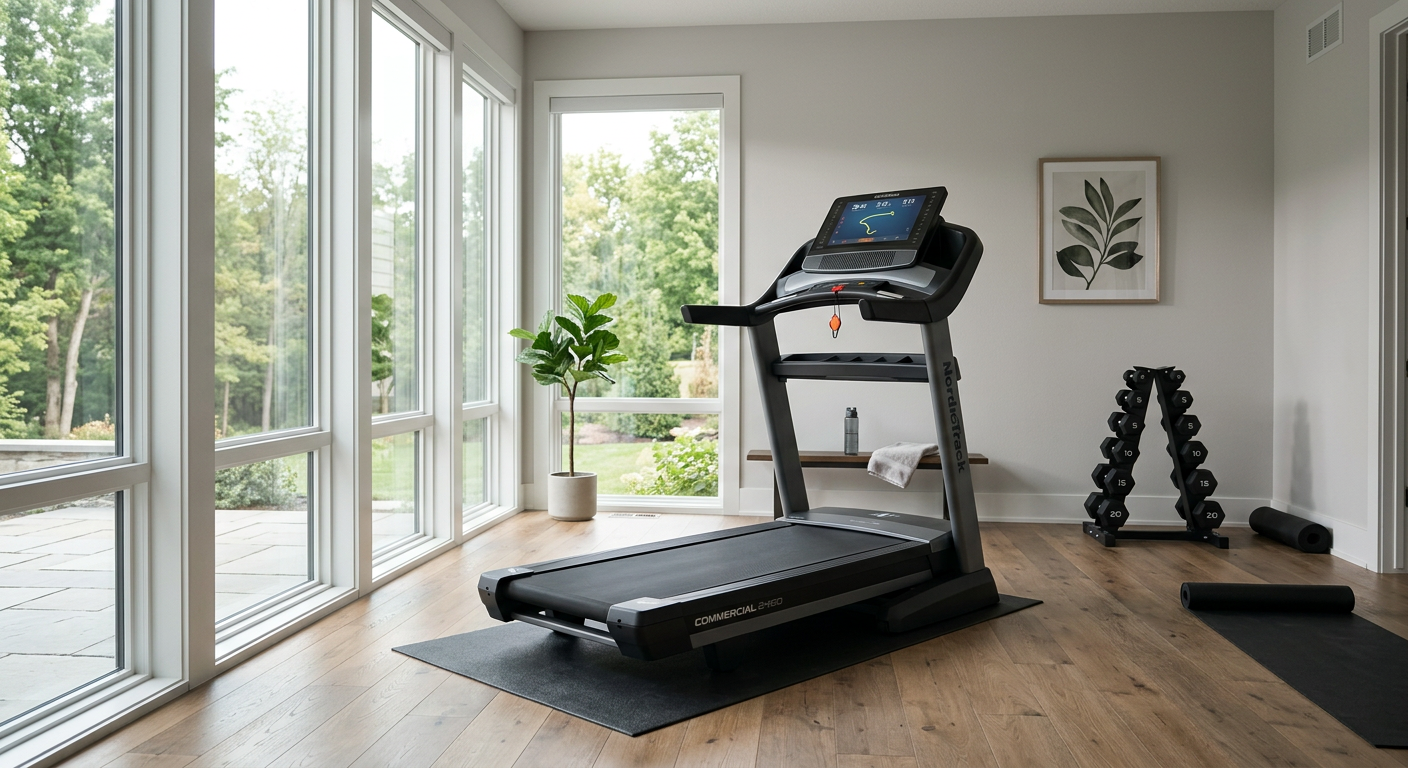
Commercial-grade machines are the gold standard for home users who have dedicated gym space and demand high-performance stability. These treadmills feature wider running surfaces, larger motors (3.0 CHP or higher), and heavy-duty steel frames that remain rock-solid even during intense sprinting.
Because of their size and mass, these units provide superior shock absorption compared to lighter models, which significantly reduces the stress on your joints over time. Investing in a professional-style treadmill is often the best choice for individuals looking to replicate the experience of a high-end health club, ensuring that the equipment will last for many years of heavy use.
- Pros: Exceptional stability; long-lasting components; wide variety of speed and incline options.
- Cons: Extremely heavy and difficult to move; requires significant floor space; higher initial investment.
How to Choose the Best Treadmill for Your Goals
When shopping, focus on the deck dimensions and cushioning system. If you are tall, ensure the belt length is at least 55-60 inches to allow for a full running stride. Cushioning is equally vital; look for adjustable or variable-density decks that provide more support at the point of foot strike.
Lastly, verify the console interface. A great treadmill workout for weight loss often relies on tracking heart rate and incline changes. Ensure the machine displays these metrics clearly or integrates with your preferred fitness tracking app via Bluetooth. If you are just starting your fitness journey, you may find that simple, consistent routines lead to better long-term results than complex, high-tech features.
FAQ
- What motor size is best for home treadmills?
Aim for a minimum of 2.5 CHP for general usage. If you are heavier or plan to run daily, look for 3.0 CHP or higher to ensure the motor doesn’t overheat. - Do I need a commercial-grade treadmill for weight loss?
Not necessarily. While commercial models are more durable, a well-maintained motorized folding treadmill is more than sufficient for reaching weight loss goals at home. - How often should I maintain my treadmill?
Most home treadmills require belt lubrication every 3 to 6 months depending on usage. Check the manufacturer’s manual for specific requirements.
Recommended Reads
- 10 important nutrients you’re not getting enough of and why it matters
- 10 essential health and wellness lifestyle tips for 2026
- Category: Fitness
- Category: Reviews & Recommendations