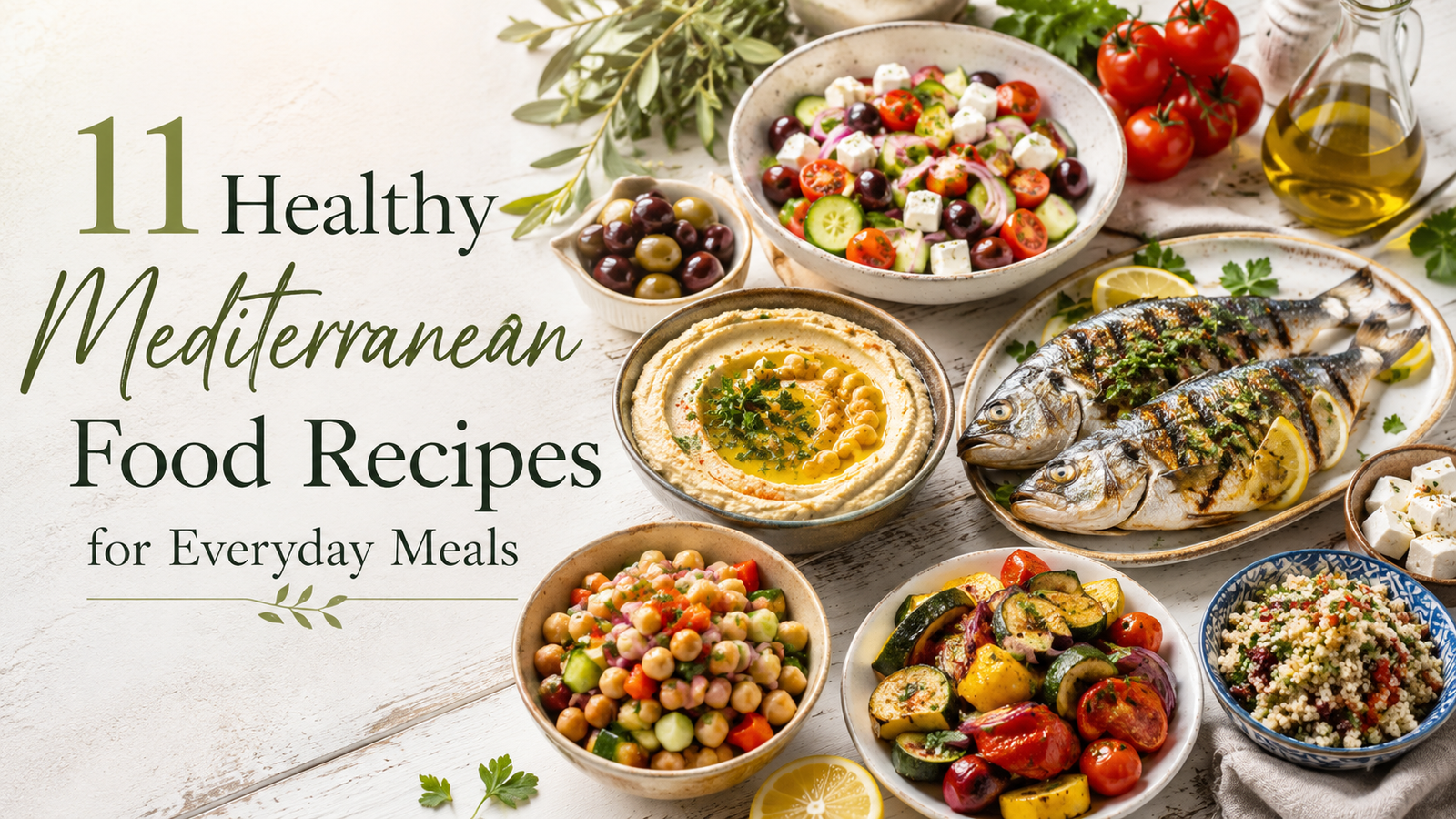
You know the Mediterranean diet is good for you. Doctors recommend it, studies back it, and yet most healthy mediterranean food recipes you find online require ingredients you’ve never heard of or an hour you don’t have on a Tuesday night. That gap between knowing and doing is where most people give up before they even start.
This list closes that gap. Every recipe here uses simple, everyday ingredients like olive oil, chickpeas, tomatoes, and fresh herbs, the same staples that make this eating style sustainable for the long run rather than a diet you abandon after two weeks, especially once you pick up a few easy hacks for cooking healthy meals at home. You’ll find options built for real weekly rotation, not just a one-off dinner party dish.
Below are 11 dishes covering breakfast, lunch, dinner, and salads, chosen because they come together fast and taste good enough that you’ll actually want to make them again. Whether you’re cooking for one or feeding a family, you’ll walk away with meals you can put on repeat without getting bored or spending your whole evening in the kitchen.
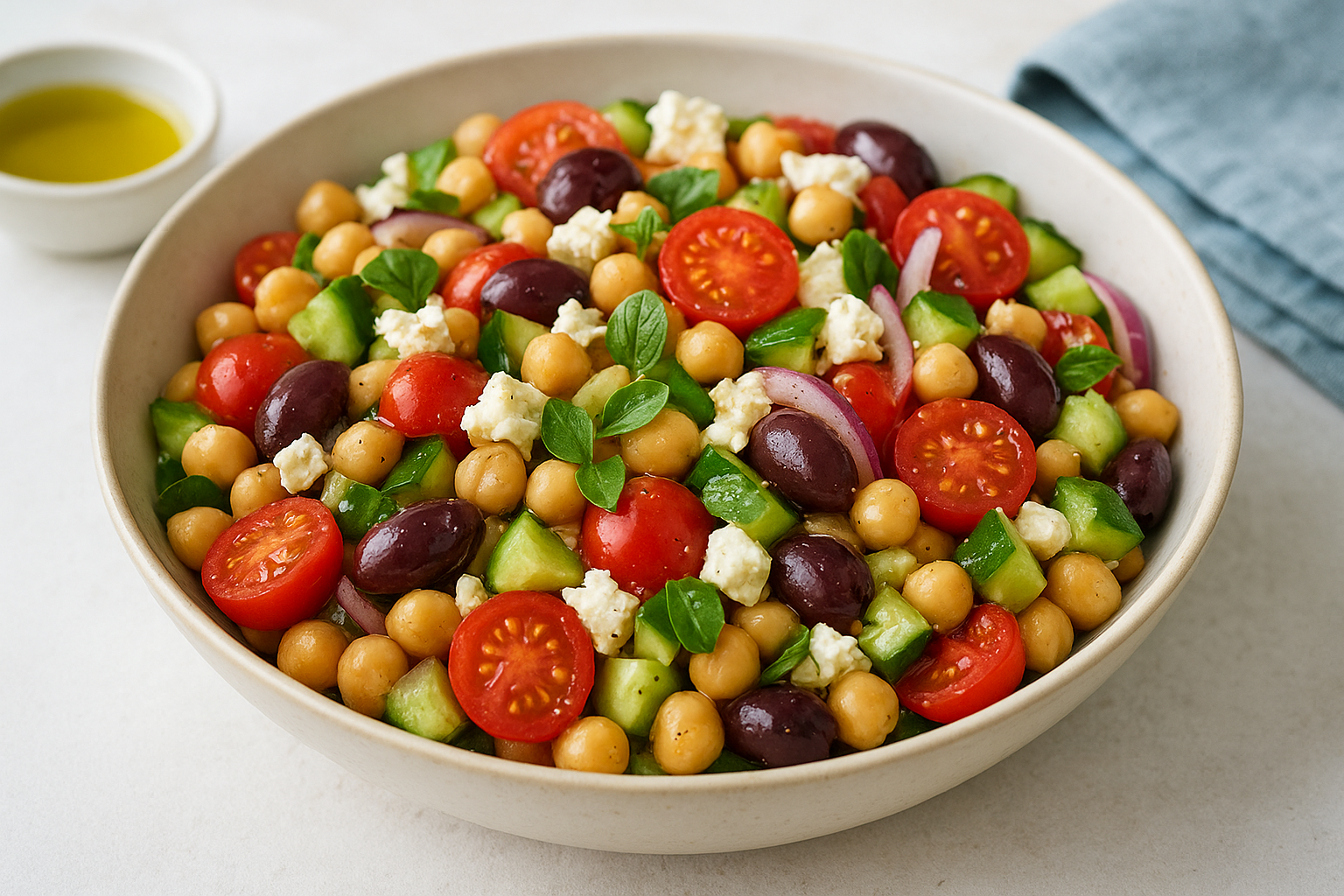
1. Greek chickpea salad with feta and olives
This salad is the fastest way to bring Mediterranean diet recipes into your week without touching a stove. You toss everything in one bowl, let it sit for ten minutes so the flavors meld, and you’ve got a lunch that holds up in the fridge for three days. It’s the recipe I hand to anyone who says they’re too busy to eat well.
Why it’s good for you
Chickpeas bring plant-based protein and fiber, which means this salad actually keeps you full instead of leaving you hungry an hour later. The combination of olive oil, feta, and olives delivers heart-healthy monounsaturated fats, the same kind researchers point to when explaining why the Mediterranean pattern is linked to lower rates of heart disease, according to the Mayo Clinic.
A salad that fills you up on chickpeas and olive oil does more for your health than any low-fat dressing ever will.
Key ingredients
- 2 cans chickpeas, drained and rinsed
- 1 cup cherry tomatoes, halved
- 1 cucumber, diced
- 1/2 red onion, thinly sliced
- 1/2 cup crumbled feta
- 1/3 cup Kalamata olives
- 3 tbsp extra virgin olive oil
- 1 tbsp red wine vinegar
- Fresh oregano, salt, and pepper
How to make it
Start by draining and rinsing the chickpeas well, since leftover canning liquid dulls the flavor of everything else. Combine the chickpeas with the tomatoes, cucumber, and onion in a large bowl. Next, whisk the olive oil, vinegar, oregano, salt, and pepper together in a small bowl, then pour it over the vegetables and toss. Finally, fold in the feta and olives gently so the cheese doesn’t crumble into dust, and let the bowl rest for ten minutes before serving.
Tips and swaps
Swap chickpeas for white beans if that’s what’s in your pantry, the texture works just as well. Adding grilled chicken or shrimp turns this side into a full dinner without changing the base recipe at all. If you’re prepping for the week, keep the dressing separate until you’re ready to eat since cucumbers and tomatoes release water and turn the salad watery overnight. For a dairy-free version, skip the feta and add extra olives and a squeeze of lemon to keep the brightness.
2. Baked lemon herb salmon with vegetables
Salmon roasted on one sheet pan with a pile of vegetables is the kind of easy mediterranean dinner recipe that saves you on a weeknight when you don’t want to think about cooking. You season, you bake, you eat, and cleanup takes five minutes because everything cooked on the same pan.
Why it’s good for you
Salmon delivers omega-3 fatty acids, one of the best-known anti-inflammatory foods and fats tied to better heart health, which is exactly why the American Heart Association recommends eating fatty fish at least twice a week. Roasting the vegetables alongside it in olive oil instead of frying keeps the meal light while still delivering fiber and antioxidants from whatever produce you have on hand.
Two servings of fatty fish a week does more for your heart than any supplement on the shelf.
Key ingredients
- 4 salmon fillets
- 2 tbsp olive oil
- 1 lemon, sliced
- 2 cups zucchini and bell peppers, chopped
- 2 cloves garlic, minced
- Fresh dill or parsley, salt, and pepper
How to make it
Preheat your oven to 400°F and line a sheet pan with parchment. Toss the vegetables with half the olive oil, garlic, salt, and pepper, then spread them out on the pan. Place the salmon fillets on top, drizzle with the remaining oil, and layer lemon slices over each piece. Bake for 15 to 18 minutes, until the salmon flakes easily with a fork.
Tips and swaps
Any firm white fish works if salmon isn’t available or isn’t in your budget that week. Swap the vegetables based on season, asparagus in spring, cherry tomatoes in summer. Leftovers flake nicely over greens for lunch the next day.
3. One-pan Mediterranean chicken and potatoes
This dish is comfort food that happens to fit your Mediterranean diet meal plan without any effort on your part. Chicken thighs roast alongside potatoes and lemon until the skin crisps and the whole kitchen smells like a taverna. One pan goes in the oven, one pan comes out, and dinner is done.
Why it’s good for you
Chicken thighs give you protein and iron without the price tag of a whole roast, while potatoes roasted in olive oil offer potassium and fiber instead of the empty calories you’d get from fries. Using bone-in, skin-on thighs also keeps the meat juicy through a long roast, so you’re not relying on sauce or extra fat to make it taste good.
A sheet pan of chicken and potatoes proves healthy eating doesn’t need to be complicated to work.
Key ingredients
- 6 bone-in, skin-on chicken thighs
- 1.5 lbs baby potatoes, halved
- 3 tbsp olive oil
- 1 lemon, juiced and zested
- 3 cloves garlic, minced
- 1 tsp dried oregano
- Salt and pepper
How to make it
Preheat your oven to 425°F. Toss the potatoes with half the olive oil, salt, and pepper, then spread them on a sheet pan. Rub the chicken thighs with the remaining oil, garlic, lemon juice, zest, and oregano, then nestle them among the potatoes skin side up. Roast for 35 to 40 minutes, until the chicken skin is golden and the potatoes are tender.
Tips and swaps
Boneless thighs cut the cooking time by about ten minutes if you’re short on patience. Adding olives or artichoke hearts halfway through roasting deepens the flavor without extra work.
4. Creamy Tuscan white bean and spinach soup
This soup gets its creaminess from blended beans, not cream, which makes it one of the more forgiving mediterranean soup recipes for a cold night. It comes together in one pot in about 30 minutes, and it tastes even better the next day once the flavors have had time to sit.
Why it’s good for you
White beans pack fiber and plant protein into every spoonful, and blending a portion of them thickens the broth without a drop of heavy cream. Spinach wilted in at the end adds iron and folate, two of the nutrients most people don’t get enough of if leafy greens rarely make it onto your plate.
Blending beans into your broth gives you a creamy soup without the cream, and your arteries will thank you.
Key ingredients
- 3 cans white beans (cannellini), drained and rinsed
- 1 onion, diced
- 3 cloves garlic, minced
- 4 cups vegetable broth
- 4 cups fresh spinach
- 2 tbsp olive oil
- 1 tsp dried thyme
- Parmesan for serving
How to make it
Heat the olive oil in a large pot and sauté the onion until soft, about five minutes. Add the garlic and thyme and cook for another minute. Pour in the broth and two cans of the beans, then simmer for ten minutes. Blend a portion of the soup with an immersion blender until creamy, stir in the remaining whole beans and spinach, and cook until the spinach wilts.
Tips and swaps
Kale works just as well as spinach if that’s what you have. A parmesan rind simmered in the broth adds depth without extra effort, just fish it out before serving.
5. Mediterranean quinoa bowl with roasted vegetables
Build-your-own bowls are having a moment for a reason, and this one turns a handful of pantry staples into a satisfying mediterranean grain bowl recipe you can customize all week. Roast a tray of vegetables on Sunday, cook a batch of quinoa, and you’ve got lunch ready to assemble in under five minutes for the next four days, which is exactly how weekly meal prep for busy people works best.
Why it’s good for you
Quinoa is a complete protein, meaning it carries all nine essential amino acids, which is rare for a plant food and makes this bowl genuinely filling on its own. Roasting the vegetables in olive oil instead of steaming or boiling them preserves more of their vitamins and natural sweetness, so you end up eating more vegetables simply because they taste better.
A grain bowl built on quinoa and roasted vegetables gives you complete protein without a single piece of meat.
Key ingredients
- 1 cup uncooked quinoa
- 2 cups mixed vegetables (zucchini, red onion, bell pepper)
- 3 tbsp olive oil, divided
- 1/2 cup crumbled feta
- 2 tbsp tahini
- 1 lemon, juiced
- Salt, pepper, and cumin
How to make it
Cook the quinoa according to package directions while you toss the chopped vegetables with half the olive oil, salt, and cumin. Roast the vegetables at 425°F for 20 minutes, stirring once. Whisk the remaining olive oil with tahini and lemon juice to make a simple dressing. Layer the quinoa, roasted vegetables, and feta in a bowl, then drizzle with the tahini dressing.
Tips and swaps
Swap quinoa for farro or brown rice if you want a heartier chew. Chickpeas or grilled chicken add extra protein without extra prep time.
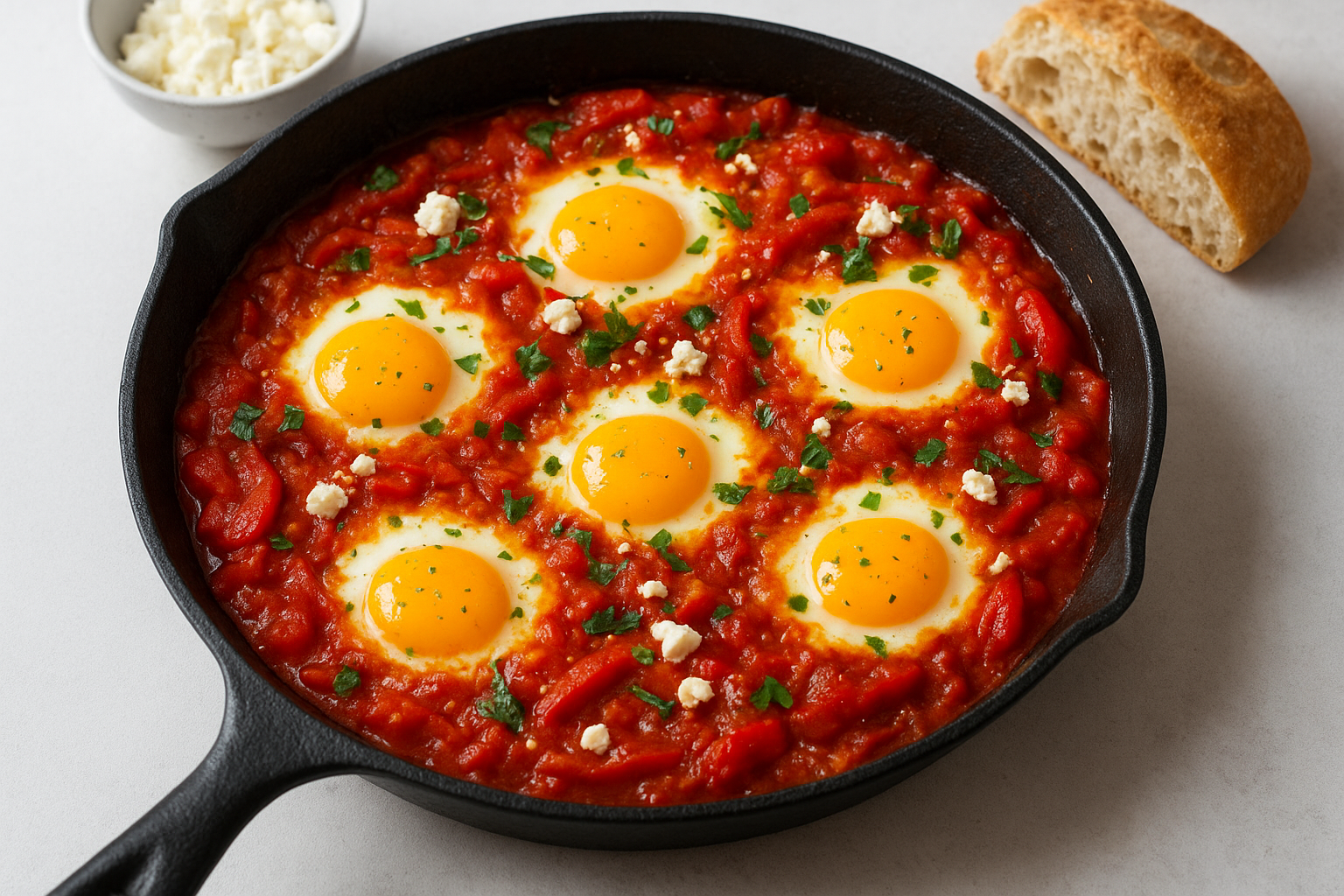
6. Shakshuka with tomatoes, peppers and eggs
Shakshuka turns a can of tomatoes and a few eggs into one of the most satisfying mediterranean breakfast recipes you can make in a single skillet. It works just as well for dinner, which makes it the kind of dish you can lean on when you’re not sure what else to cook.
Why it’s good for you
Eggs poached right in the tomato sauce give you protein and choline without any extra dishes, while the peppers and tomatoes simmered down deliver vitamin C and lycopene, two of the compounds in foods that naturally strengthen your immune system, in a form your body absorbs even better once they’re cooked. Cooking the sauce low and slow in olive oil also means you get the fat you need to actually absorb those fat-soluble nutrients instead of losing them.
One skillet of tomatoes, peppers, and eggs gives you a breakfast that actually holds you until lunch.
Key ingredients
- 2 tbsp olive oil
- 1 onion, diced
- 1 red bell pepper, sliced
- 3 cloves garlic, minced
- 1 can crushed tomatoes
- 1 tsp cumin, 1 tsp paprika
- 6 eggs
- Fresh parsley, feta, salt, and pepper
How to make it
Heat the olive oil in a large skillet and sauté the onion and pepper until soft, about seven minutes. Stir in the garlic, cumin, and paprika, then add the crushed tomatoes and simmer for ten minutes until it thickens. Make six small wells in the sauce, crack an egg into each one, cover, and cook until the whites set but the yolks stay runny, roughly six minutes.
Tips and swaps
Add spinach or chickpeas to the sauce for extra bulk and fiber. Crumbled feta on top adds richness, and crusty bread on the side is nearly mandatory for scooping.
7. Whole wheat pasta with garlic, olive oil and broccolini
This pasta is proof that mediterranean pasta recipes don’t need cream or heavy cheese to feel satisfying. Garlic and olive oil do the heavy lifting here, and broccolini adds enough texture and bite that you won’t miss meat sauce at all. It’s ready in the time it takes water to boil and pasta to cook, so it’s a real option on a night when takeout feels easier.
Why it’s good for you
Whole wheat pasta brings fiber and complex carbs that digest slower than white pasta, keeping your energy steadier through the afternoon or evening, one of the simplest ways to boost energy without caffeine. Broccolini adds vitamin C and folate, and cooking it briefly in olive oil rather than boiling it to death means it keeps its snap and most of its nutrients intact.
A pasta dish built on garlic, olive oil, and vegetables can be just as filling as one loaded with meat.
Key ingredients
- 12 oz whole wheat pasta
- 1 bunch broccolini, chopped
- 4 cloves garlic, thinly sliced
- 1/4 cup olive oil
- 1/2 tsp red pepper flakes
- Parmesan, lemon zest, salt, and pepper
How to make it
Cook the pasta in salted water, saving a cup of the starchy water before draining. Meanwhile, warm the olive oil in a skillet and cook the garlic and red pepper flakes until fragrant, about a minute. Add the broccolini and sauté until bright green and tender, roughly five minutes. Toss in the pasta with a splash of the reserved water, then finish with parmesan and lemon zest.
Tips and swaps
Swap broccolini for broccoli or asparagus depending on what’s fresh. White beans stirred in at the end add extra protein without extra prep.
8. Greek yogurt parfait with honey, walnuts and berries
This parfait is the easiest of all the mediterranean breakfast recipes on this list because it requires zero cooking. Layer yogurt, fruit, and nuts in a glass, and you’ve got breakfast in under three minutes. It also works as a dessert if you want something sweet that doesn’t undo a good day of eating.
Why it’s good for you
Greek yogurt delivers protein and gut-friendly probiotics, giving you more staying power than a bowl of cereal ever could. Walnuts bring omega-3 fats and crunch, while berries, one of the superfoods backed by science, add fiber and antioxidants without spiking your blood sugar the way a pastry would. A drizzle of honey sweetens the whole thing naturally, so you skip the refined sugar found in most flavored yogurts on grocery shelves and learn how to stop sugar cravings naturally.
A parfait built on plain yogurt and real fruit beats flavored yogurt cups every single time.
Key ingredients
- 2 cups plain Greek yogurt
- 1 cup mixed berries (blueberries, strawberries, raspberries)
- 1/3 cup chopped walnuts
- 2 tbsp honey
- Pinch of cinnamon
How to make it
Spoon a layer of yogurt into a glass or bowl. Add a layer of berries, then a sprinkle of walnuts. Repeat the layers until you reach the top, then finish with a drizzle of honey and a dusting of cinnamon.
Tips and swaps
Swap walnuts for almonds or pistachios if that’s what’s in your pantry. Frozen berries thawed overnight in the fridge work just as well as fresh when berries are out of season or your budget is tight.
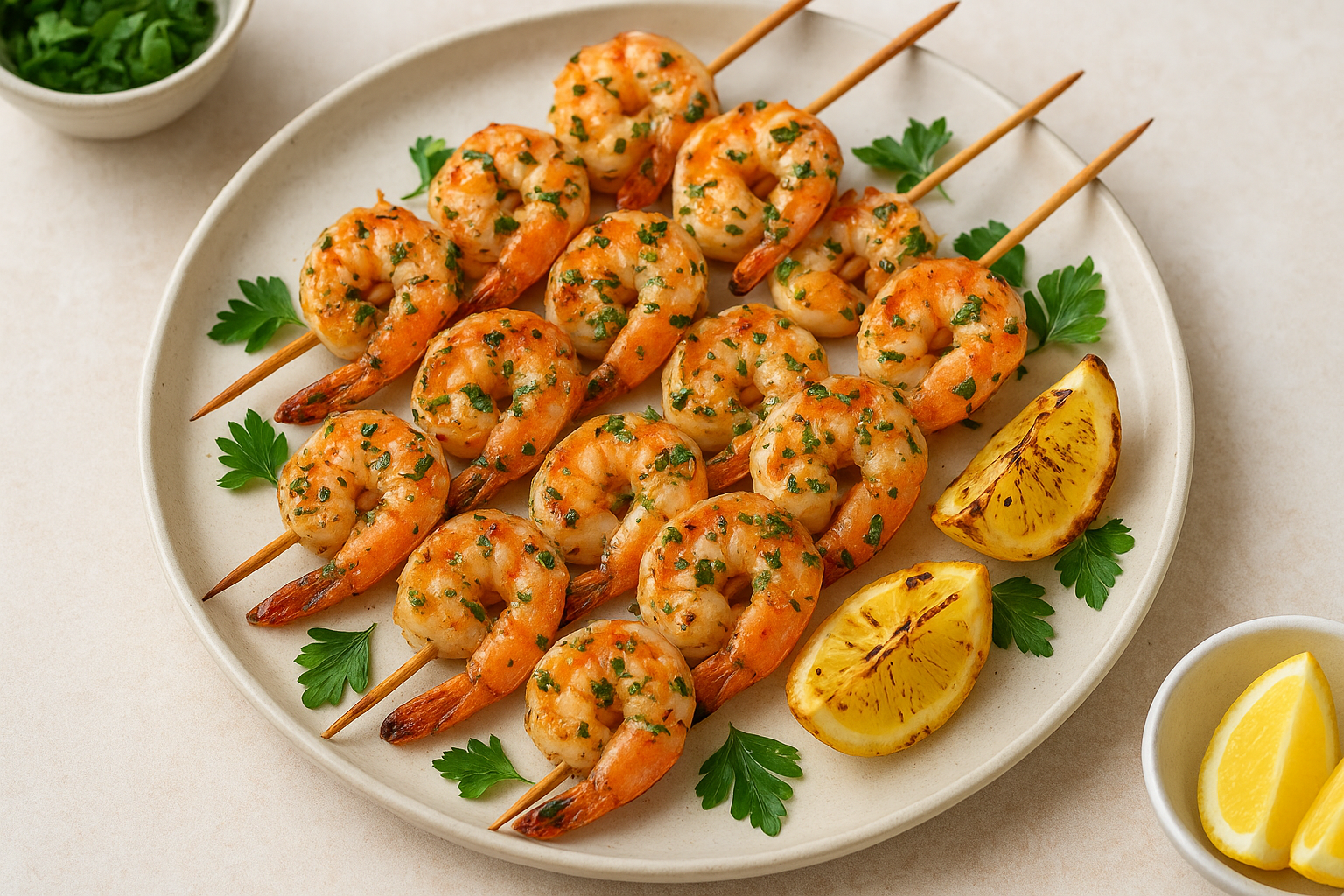
9. Grilled shrimp skewers with lemon and herbs
Shrimp skewers cook in minutes and taste like a beach vacation, which makes them one of the fastest mediterranean grilling recipes you can pull together on a weeknight. Marinate them in the morning, thread them onto skewers when you get home, and dinner is on the table before you’ve even finished setting up the grill.
Why it’s good for you
Shrimp gives you lean protein with almost no saturated fat, so you get a filling dinner without the heaviness of red meat. The lemon and herb marinade adds vitamin C and antioxidants while the olive oil base helps your body absorb the fat-soluble nutrients from whatever vegetables you serve alongside it.
A skewer of shrimp off the grill delivers more protein per calorie than almost anything else on this list.
Key ingredients
- 1.5 lbs large shrimp, peeled and deveined
- 3 tbsp olive oil
- 2 lemons, juiced and zested
- 3 cloves garlic, minced
- Fresh oregano and parsley, salt, and pepper
- Wooden or metal skewers
How to make it
Whisk the olive oil, lemon juice, zest, garlic, and herbs together, then toss the shrimp in the marinade for 15 to 20 minutes, no longer or the acid starts to cook the shrimp. Thread the shrimp onto skewers and grill over medium-high heat for two to three minutes per side, until they turn pink and opaque. Serve immediately with extra lemon wedges.
Tips and swaps
If you’re using wooden skewers, soak them in water for 30 minutes first so they don’t char. No grill? A hot cast-iron skillet works just as well indoors.
10. Hearty lentil and vegetable stew
Lentils simmered with carrots, celery, and tomatoes turn into one of the most budget-friendly mediterranean stew recipes you’ll ever make. Nothing here needs soaking overnight, so you can start the pot after work and have dinner ready before you’d finish scrolling a delivery app. This is the dish to keep in your back pocket when the fridge looks empty but you still want something that feels substantial.
Why it’s good for you
Lentils are loaded with fiber and plant protein, and unlike beans, they cook fast enough for a weeknight without any prep the night before. The mix of carrots, celery, and tomatoes adds beta-carotene and vitamin C, rounding out a bowl that costs pennies per serving but still delivers real nutrition.
A pot of lentil stew proves that the cheapest ingredient in your pantry can also be the most nourishing.
Key ingredients
- 2 cups brown or green lentils, rinsed
- 1 onion, diced
- 2 carrots, chopped
- 2 celery stalks, chopped
- 1 can diced tomatoes
- 6 cups vegetable broth
- 2 cloves garlic, minced
- 1 tsp cumin, 1 tsp smoked paprika
- Olive oil, salt, and pepper
How to make it
Sauté the onion, carrots, and celery in olive oil until softened, about eight minutes. Stir in the garlic and spices, then add the lentils, tomatoes, and broth. Bring to a boil, then reduce to a simmer and cook uncovered for 30 minutes, until the lentils fall apart slightly and the stew thickens.
Tips and swaps
Stir in chopped kale near the end for extra greens. A splash of red wine vinegar at the finish brightens the whole pot.
11. Mediterranean hummus and veggie wrap
Wraps are the answer when you need lunch on the table in five minutes flat, and this one turns hummus and raw vegetables into a genuinely satisfying mediterranean lunch recipe you won’t get bored of. Spread, layer, roll, done. No stove, no timer, no dishes beyond a cutting board.
Why it’s good for you
Hummus brings fiber and plant protein from the chickpeas and tahini blended into it, so it does more work than a plain condiment ever could. Loading the wrap with raw vegetables adds crunch and antioxidants without extra calories, and using a whole wheat tortilla instead of white keeps your blood sugar steadier through the afternoon.
A wrap built on hummus and vegetables can carry you through a busy afternoon better than a sandwich ever will.
Key ingredients
- 4 whole wheat tortillas
- 1 cup hummus
- 1 cucumber, sliced into strips
- 1 cup shredded carrots
- 1 cup baby spinach
- 1/2 cup roasted red peppers, sliced
- 1/4 cup crumbled feta
How to make it
Lay a tortilla flat and spread a generous layer of hummus across the middle third. Layer the cucumber, carrots, spinach, roasted peppers, and feta on top, then fold in the sides and roll tightly from the bottom up. Slice in half on a diagonal and serve, or wrap in foil to eat on the go.
Tips and swaps
Add grilled chicken or falafel if you want more protein for dinner instead of lunch. Swap the tortilla for a large lettuce leaf if you’re skipping grains, and use a flavored hummus like roasted garlic for extra punch without adding another ingredient.
Making these flavors part of your everyday routine
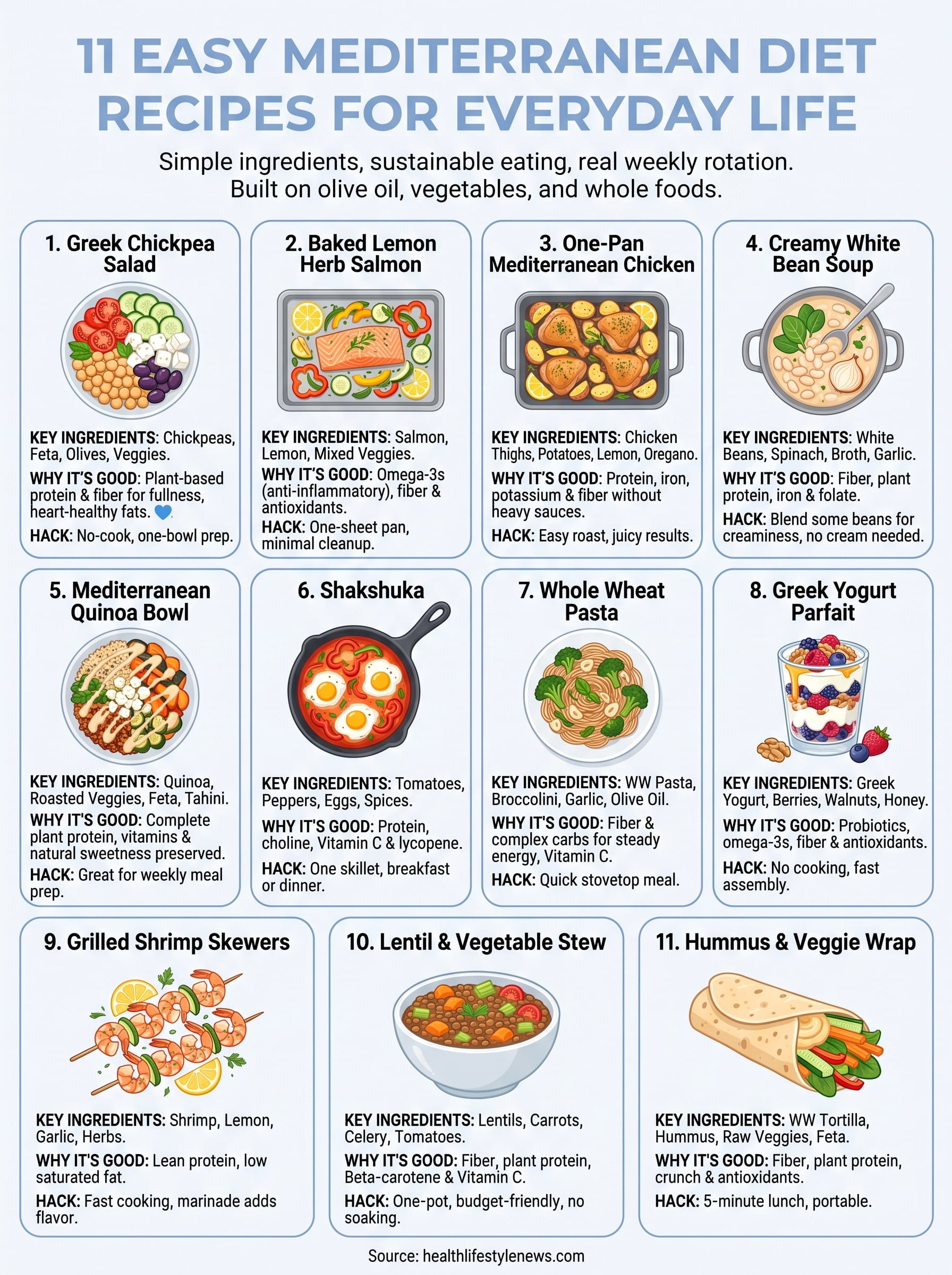
None of these 11 dishes demand a special trip to a specialty grocer or a culinary degree. You’ve got chickpeas, olive oil, and fresh vegetables doing most of the work across every recipe, which is exactly why this style of eating sticks around long after a typical diet fizzles out. Pick two or three from this list to start, maybe the chickpea salad for lunch and the sheet pan chicken for dinner, and build from there once they feel like second nature.
Rotating through these healthy mediterranean food recipes each week keeps your meals interesting without adding hours to your schedule, and that’s the whole point. You don’t need to overhaul your kitchen overnight. You just need a few reliable dishes you’ll actually make again. For more practical guidance on eating well without the guesswork, read our expert health and wellness advice for a balanced life in 2026.